

Everyone’s skin gets dry throughout the winter, but you do not have to be fixed to months of flaky skin. Winter skincare explains why skin gets dry during the winter, signs of dry skin, tips on how to maintain a dry skin-free winter and how to cure dry skin on face overnight.
Table of Contents
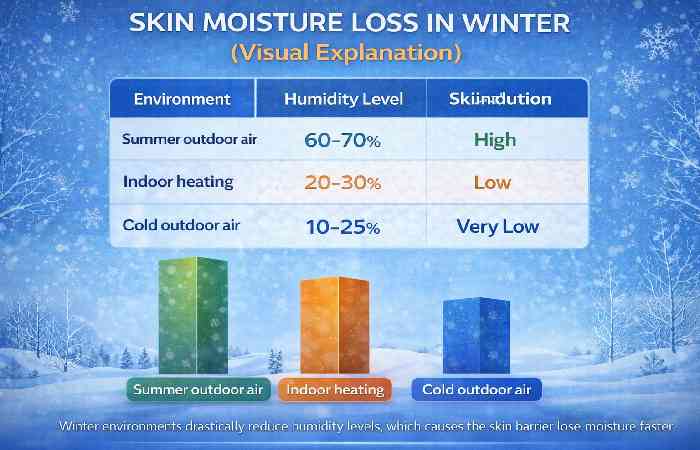
Skin Moisture Loss in Winter (Visual Explanation)
Why does skin get dry in the winter?
Skin gets dry when it is not protected in and is not hydrated enough. Winter weather acts in a few ways to cause skin dryness. To start, cold air has less moisture than warm air. Because of this, in winter when skin is trying to draw moisture from the air, it is actually drawing moisture through evaporation on the skin’s surface.
Even when someone is inside the moisture in the air is being dried by the heating system which causes further skin dryness. Many individuals also try to get cozy in the winter by taking hot baths and showers. Keeping water on the skin does dry out skin and the hot water is a huge part of the problem.
Cold weather is also very harsh on your skin. Snow, wind , and ice can dry it out and even damage your skin barrier. Sun exposure during the winter can also lead to sunburn, which dries out the skin. In fact, if you live in an area with a lot of snow, the sun reflects off the white expanse, increasing your UV exposure.
Global Winter Climate Effects on Skin Hydration
Understanding how winter climates affect skin helps explain dry skin in winter problems worldwide.
| Region | Winter Climate | Effect on Skin | Common Skin Issue |
| North America | Cold & low humidity | Rapid moisture loss | Cracked skin |
| Europe | Wind + cold temperatures | Skin barrier damage | Redness |
| Asia | Dry indoor heating | Dehydration of skin cells | Flaky skin |
| Middle East | Cold nights + dry air | Reduced skin oil production | Rough texture |
| Australia (Southern winter) | Wind exposure | Surface dehydration | Sensitive skin |
Scientific Insight
When humidity drops below 40%, the skin barrier begins to lose water faster. Dermatologists call this process Transepidermal Water Loss (TEWL).
What are the Signs of Dry Skin?
There are numerous signs of dry skin to look out for during the winter and also all year round.
- Feeling of tightness or itchiness
- Rough texture
- Flaky or peeling patches
- Fine lines or cracks
- Deeper cracks that may bleed
- Discoloration on the dry patches
- Ashy look and texture
- Sensation of stinging or burning
- Inflammation and irritation
- Possible infection if left untreated
Dry skin can happen anywhere on the body, though it’s most common on the face, hands, feet, elbows, and knees. Dry skin is more mutual in older people since your oil production slows down as you age. Climate and genetics also show a role in the development of dry skin. However, anyone can get dry skin at any point in their life. Read on to discover how to treat dry skin in the winter.
Dry Skin in Winter Symptoms by Severity Level
| Severity | Symptoms | Skin Condition |
| Mild | Tightness, dull skin | Temporary dehydration |
| Moderate | Flakes, itchiness | Damaged moisture barrier |
| Severe | Cracks, redness | Chronic dryness |
| Extreme | Bleeding cracks | Possible eczema |
Warning Signs That Need Medical Attention
- Persistent itching
- Deep bleeding cracks
- Severe redness
- Swelling
- Skin infection
How to Cure Dry Skin on Face Overnight
Overnight skin repair process (skin regenerates faster at night – science-backed)
Step-by-step night routine:
- Gentle cleanse
- Hydrating serum (hyaluronic acid + glycerin)
- Thick moisturizer
- Occlusive layer (petrolatum / sleeping mask)
- Ingredients proven to work overnight:
- Ceramides (repair barrier)
- Niacinamide (reduces inflammation)
- Urea (improves moisture retention)
- What to avoid at night:
- Retinoids (for very dry skin)
- Alcohol-based products
Dermatologist-Recommended Night Routine for Dry Skin in Winter
| Step | Product Type | Key Ingredient | Purpose |
| Step 1 | Gentle Cleanser | Ceramides | Remove dirt without drying |
| Step 2 | Hydrating Serum | Hyaluronic Acid | Attract moisture |
| Step 3 | Moisturizer | Glycerin | Lock hydration |
| Step 4 | Occlusive Layer | Petrolatum | Prevent water loss |
Pro Tip
Skin repair happens 2x faster during sleep, which is why night skincare routines are essential for treating dry skin on face in winter.
Resource:
https://www.ncbi.nlm.nih.gov/pmc/articles/PMC5849435/
How to Treat Dry Skin in Winter?
Choose the Right Cleanser
Cleansing may be the maximum drying step of your skincare and body care routine, but picking a gentle, purifying face cleanser can ease the process. After washing your face, your face should feel clean and refreshed, not tight and stripped of moisture. You should also wash your face in lukewarm, not hot or cold, water. To keep the water from drying your skin, rinse your face quickly and keep showers and baths short.
Healthy Lifestyle Habits to Prevent Dry Skin in Winter
What to include:
Eating healthy fats (nuts, seeds, olive oil)
Foods rich in:
- Omega-3
- Vitamin E
- Zinc
Food for Dry Skin in Winter
Diet plays a major role in preventing dry skin in winter naturally.
| Food | Nutrient | Skin Benefit |
| Salmon | Omega-3 | Reduces inflammation |
| Avocado | Healthy fats | Improves skin hydration |
| Almonds | Vitamin E | Protects skin barrier |
| Spinach | Iron + vitamins | Improves circulation |
| Sweet potatoes | Beta-carotene | Supports skin repair |
Foods That Worsen Dry Skin
- Excess caffeine
- Alcohol
- Processed sugar
- Ultra-processed foods
Moisturize Regularly
To slow the skin’s water loss, it’s important to maintain the oil skin balance. Moisturizing is the best way to do this. In winter, it’s best to use a heavier moisturizer, especially at night. If your skin is very dry, you may add a facial oil or a healing ointment that contains petrolatum and urea.
Which Moisturizer is Best for Dry Skin in Winter?
| Skin Type | Moisturizer Ingredient | Recommended Formula |
| Very Dry Skin | Shea Butter | Thick cream |
| Sensitive Skin | Ceramides | Barrier repair cream |
| Mature Skin | Peptides | Anti-aging moisturizer |
| Acne-Prone Skin | Hyaluronic Acid | Lightweight gel cream |
| Extremely Dry Skin | Petrolatum | Occlusive ointment |
Look for these ingredients
- Ceramides
- Hyaluronic acid
- Glycerin
- Squalane
- Urea
Sunscreen Is a Must
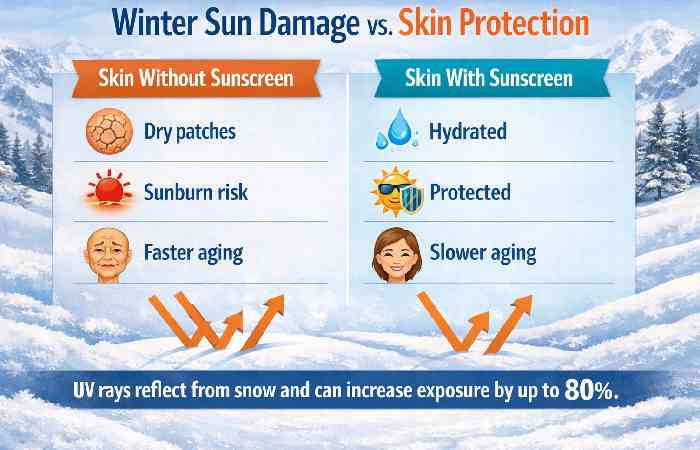
Sunscreen Is a Must All year round skin is exposed to UV rays that cause skin aging and neglecting to wear sunscreen causes skin aging as well as skin irritation due to dryness. Wearing sunscreen is especially needed in snow sports because the sun reflects off the snow and can cause sun burns. Dragging the sun screen across the exposed skin on your the face, neck, and hands is a must.
Exfoliate Gently
We know that skin can get dry and lofty, and it can be tempting to take a heavy exfoliant and blast the skin, but this is a skin damaging and a bad solution to the problem. Using a powerful exfoliant in winter is okay, but it must be less frequent. For example, if you were previously exfoliating every day, and now you have to take time to drop it down to 1-2 times in the winter.
Safe Exfoliation Guide for Dry Winter Skin
| Exfoliation Type | Frequency | Best For |
| Chemical (AHA) | Once weekly | Dull skin |
| Lactic acid | Once weekly | Sensitive skin |
| Enzyme exfoliation | Every 10 days | Gentle resurfacing |
| Physical scrub | Twice monthly | Thick skin |
Avoid
- Harsh scrubs
- Daily exfoliation
- High alcohol toners
Lip and Hand Care
The skin of lips and face gets dried and chapped quickly because they are exposed to the elements a lot. Always apply a lip mask throughout the day and not just at night to help with this. Hand lotion should be applied after every hand wash, and a denser hand cream should be applied at night while sleep. Snow, ice, and wind can dry out your skin and damage your skin barrier. Skin can be exposed to the sun and also be sunburned, which dries out the skin.
Top Worldwide Products for Dry Skin in Winter
These products are widely available internationally and can be purchased online from platforms like Amazon, Nykaa, Sephora, Flipkart, Walmart, and Boots.
Moisturizers for Sensitive Skin (Winter Dryness)
| Product | Price Range | Key Ingredients | Available Online | Best For |
| La Roche‑Posay Toleriane Double Repair Face Moisturizer | ₹3000–₹3500 | Ceramides, Niacinamide | Amazon, Sephora | Redness & irritation |
| Aveeno Daily Moisturizing Lotion | ₹900–₹1200 | Colloidal oatmeal | Amazon, Walmart | Extremely sensitive skin |
| Cetaphil Moisturising Cream | ₹700–₹900 | Glycerin, Vitamin B5 | Amazon, Nykaa | Gentle daily hydration |
| Bioderma Atoderm Intensive Baume | ₹1500–₹2200 | Niacinamide, lipids | Amazon, Boots | Eczema-prone skin |
| First Aid Beauty Ultra Repair Cream | ₹2500–₹3500 | Shea butter, oatmeal | Sephora, Amazon | Irritated winter skin |
Sensitive skin requires fragrance-free and dermatologist-tested formulas to avoid irritation during cold weather.
Moisturizers for Normal Skin (Winter Hydration)
| Product | Price Range | Key Ingredients | Available Online | Best For |
| CeraVe Moisturizing Cream | ₹350–₹1500 | Ceramides, Hyaluronic acid | Amazon, Walmart | Daily hydration |
| Clinique Moisture Surge 100H Hydrator | ₹2000–₹3500 | Aloe bio-ferment | Sephora, Nykaa | Long-lasting hydration |
| Nivea Creme (Blue Tin) | ₹150–₹500 | Mineral oil, glycerin | Amazon, Flipkart | Cold winter climates |
| The Body Shop Vitamin E Moisturizer | ₹1200–₹2000 | Vitamin E | Amazon, Body Shop | Skin protection |
| Eucerin Advanced Repair Cream | ₹1800–₹2600 | Ceramides, urea | Amazon, Walmart | Deep winter repair |
Ceramides and hyaluronic acid help restore the skin barrier and retain moisture, making them popular winter ingredients.
Moisturizers for Oily Skin (Winter Dryness + Oil Control)
| Product | Price Range | Key Ingredients | Available Online | Best For |
| Neutrogena Hydro Boost Water Gel | ₹900–₹1200 | Hyaluronic acid | Amazon, Nykaa | Lightweight hydration |
| Garnier Moisture Rescue Gel Cream | ₹500–₹900 | Antioxidants | Amazon, Flipkart | Combination skin |
| Clinique Dramatically Different Gel | ₹2000–₹3500 | Oil-free hydrators | Sephora | Acne-prone skin |
| Minimalist Sepicalm Moisturizer | ₹400–₹700 | Oat extract | Amazon, Nykaa | Sensitive oily skin |
| IPCA Acne OC Moisturizer | ₹350–₹600 | Oil-control formula | Pharmacy, Amazon | Oily acne-prone skin |
Lightweight gel moisturizers are ideal for oily skin because they hydrate without clogging pores.
How to Use Winter Moisturizer Correctly
Step-by-Step Method
- Cleanse the skin gently
Use a mild cleanser with no alcohol. - Apply moisturizer on slightly damp skin
This helps lock in water and prevents dehydration. - Use upward strokes
Massage gently to improve absorption. - Seal moisture at night
Apply a thicker cream or sleeping mask. - Apply sunscreen in daytime
Winter UV rays still damage skin.
Dermatologists also recommend applying moisturizer within three minutes after bathing to prevent moisture loss.
Common Winter Skincare Mistakes That Make Dry Skin Worse
Examples:
- Washing face too often
- Skipping moisturizer after cleansing
- Using summer skincare products
- Ignoring hands, neck, and lips
Natural Home Remedies for Dry Skin in Winter
Many people search how to treat dry skin in winter at home. These remedies are commonly used worldwide.
| Remedy | How to Use | Skin Benefit |
| Coconut Oil | Apply before sleep | Deep hydration |
| Aloe Vera | Use as face mask | Soothes irritation |
| Honey Mask | 10-minute application | Natural humectant |
| Oatmeal Bath | Weekly soak | Relieves itching |
| Milk Cream | Apply to face | Softens dry patches |
How to Prevent Dry Skin in Winter (Quick Tips)
- Use a humidifier indoors
- Drink 2–3 liters of water daily
- Avoid very hot showers
- Apply moisturizer within 3 minutes after bathing
- Wear gloves in cold weather
- Use lip balm frequently
How to Avoid Dry Skin in Winter Naturally
Natural prevention methods include:
| Method | Benefit |
| Drinking warm herbal tea | Hydrates body |
| Using humidifiers | Improves indoor humidity |
| Applying natural oils | Strengthens skin barrier |
| Eating seasonal fruits | Provides vitamins |
Frequently Asked Questions About Dry Skin in Winter
Why does my skin get dry in winter even if I moisturize?
Low humidity and indoor heating increase moisture loss from the skin.
Which moisturizer is best for dry skin in winter?
Creams with ceramides, hyaluronic acid, and glycerin are most effective.
Can diet help dry winter skin?
Yes. Foods rich in omega-3, vitamin E, and antioxidants improve skin hydration.
Conclusion
Each winter season comes the inevitable dry skin that annoys us all. Unfortunately, it is also inevitable. Despite the cold weather, inside the home heating, and harsh winter winds, damaging the moisture barrier of our skin, causing skin dryness and irritation.
A routine is important. Changes in your routine such as avoiding hot showers, and, of course, moisturizing will help prevent the skin from cracking and causing irritation from winter’s dry skin. Supporting the skin from within is a great healthy routine change. Paying attention to your skin’s needs will help improve the way the skin looks and also the way that it feels and strengthen it for the long run. With the best care you will be able to enjoy all the seasons with smooth skin and best of all hydrated skin.
