
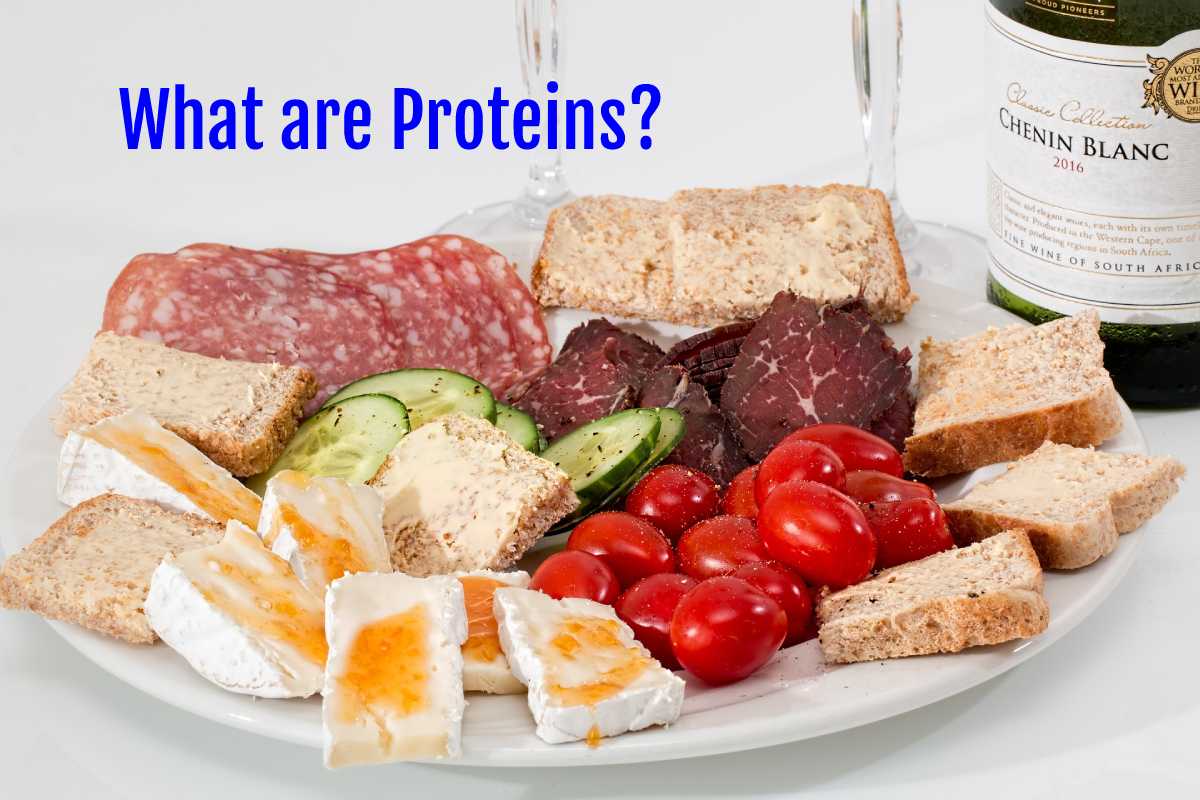
Proteins requirements vary between people. Protein can be of animal or plant origin. Every cell in the body contains protein because it is imperative to keep bones, muscles, skin, and tissues in good condition.
Table of Contents
What are they for?
Proteins are amino acid molecules linked by peptide bonds. They are present in all the cells of the body. Therefore, they participate in all their functional processes. The chemical composition of proteins is as follows:
- Oxygen
- Carbon
- Hydrogen
- Nitrogen
- Sulfur
- Match
Proteins perform vital functions. Thanks to their nitrogen content, they benefit body growth, help maintain tissues, and allow essential compounds to be transported through the blood.
What are Protein Foods?

Proteins are obtain from food. Therefore, the correct percentage of protein is essential to have a healthy, balanced diet with enough protein elements.
Many people associate protein with meat, but in reality, it is not only found in foods of animal origin but also in some foods of plant origin. To have a diet rich in protein, we will show some protein foods:
Meats
Protein is found in all kinds of meat. The most consumed are chicken, fish, bovine, pork and rabbit meat.
Dairy
All products made from milk contain them, be it cheese, butter, yoghurt, or milk sweets, among others.
Grains
The most consumed grains for their protein content are lentils, soybeans, peas, beans and chickpeas.
Eggs
Eggs are a type of food widely consumed due to their high protein value. The best known are chicken and quail.
Cereals
Some cereals are rice, wheat, barley, quinoa and oats.
Dried Fruits
Nuts beneficial for an excellent diet are peanuts
Walnuts And Cashew Seeds.
Only foods of animal origin have complete proteins. That is, they provide all the amino acids that the body requires. But if you want to obtain all the amino acids from foods of plant origin, a combination must be made between them. The FINISHER VEGAN PROTEIN supplement helps to achieve an optimal combination. Here you have all the Vegan Protein purchase options .protein types
Protein types can be defined according to different criteria, so there is no single classification system. For example, these can be classified according to their form, solubility, chemical composition, or origin.
- According to the form
- Proteins can be fibrous, globular, or mixed.
- Depending on the solubility
- According to the solubility of proteins, they can be globular, fibrous, integral membrane and intrinsically disordered.
- According to the chemical composition
- These can be simple or conjugated proteins.
- Depending on the origin
Types of Protein Foods: Animal vs Plant-Based
| Protein Source | Examples | Benefit |
| Animal Protein | Chicken, Fish, Eggs | Complete amino acids |
| Plant Protein | Lentils, Soy, Quinoa | Fiber + heart health |
| Dairy Protein | Milk, Cheese | Bone strength |
| Supplement Protein | Whey, Vegan powders | Convenience |
- Animal protein = complete protein
- Plant protein = combine for full amino acids
- Supplements = useful for busy lifestyles
Resource Link
Global nutrition research:
https://www.who.int/news-room/fact-sheets/detail/healthy-diet
How Proteins Work in the Human Body
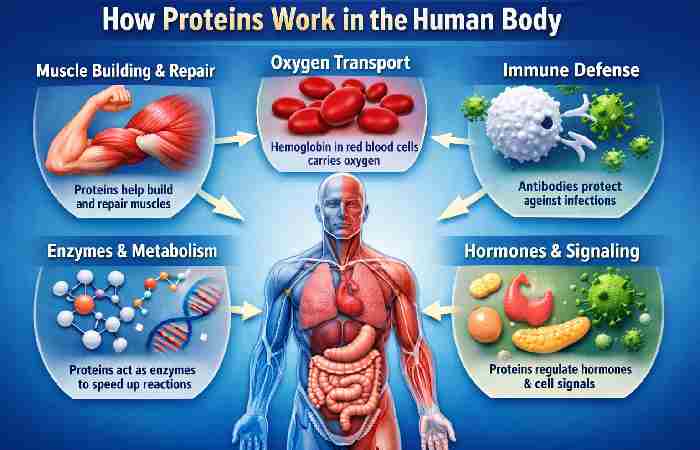
| Protein Type | Function | Example |
| Structural | Support tissues | Collagen |
| Transport | Carry nutrients | Hemoglobin |
| Enzymatic | Speed reactions | Amylase |
| Immune | Fight infections | Antibodies |
| Contractile | Movement | Actin |
| Storage | Store nutrients | Ferritin |
Did You Know?
Your body uses protein every second—even at rest—for repair, immunity, and metabolism.
Classification of Proteins Based on Their Functions
The Role of Proteins in the Human Body and Their Classification Not all proteins are the same. In the human body, proteins are classified not only based on their origin, but also based on what functions they perform. This helps highlight the importance of the role of protein in overall health, beyond just muscle building.
1. Structural Proteins
The role of this proteins is to provide strength, shape, and support to cells and tissues.
It is very important because without them, tissues would fail integrity and would become inelastic.
Examples: Collagen: Supports the skin, bones, tendons, and ligaments Keratin: Forms the hair, nails, and the outer layer of skin
Elastin: Allows the tissues such as skin and blood vessels to return to their original state after distension These proteins are important for skin health, nail health, and joint support.
2. Transport Proteins
The role of this proteins is to move essential substances throughout the body via blood or cell membranes.
Its is important as it ensure oxygen, nutrients, and minerals reach the right place.
Examples of Transport Proteins
| Transport Protein | What It Transports | Why It Matters |
| Hemoglobin | Oxygen | Supplies oxygen to tissues and organs |
| Transferrin | Iron | Supports red blood cell production |
| Albumin | Hormones, fatty acids | Maintains fluid balance in blood |
| Lipoproteins | Cholesterol & fats | Regulates lipid transport |
Without transport proteins, nutrients cannot be delivered efficiently, even if your diet is perfect.
3. Enzymatic Proteins
Role: Accelerate most of the body’s biochemical reactions. Why important: Reactions of vital processes are important but will take a longer time without enzymes.
Examples: Amylase: Assists in the digestion of carbohydrates. Pepsin: Destroys proteins in the stomach.
Lactase: Assists in the digestion of lactose. Each and every metabolic and digestive activity relies on enzymatic proteins.
4. Defensive (Immune) Proteins
Role: Protect against infections and diseases. Why important: Proteins are one of the pillars of the immune system.
Examples: Antibodies (Immunoglobulins): Help fight bacteria and viruses.
Complement proteins: Help enhance the response of the immune system. To attain and help speed up recovery from illness, one should take a sufficient amount of proteins.
5. Contractile (Motor) Proteins
Role: Help in the movement of cells and tissues.
Why important: They are crucial in muscle contraction and movement.
Examples: Actin, Myosin. These proteins enable muscle contraction and help them lift and create force.
6. Storage Proteins
Role: Keep nutrients in store for later use.
Why important: They help keep the body used in times of shortage or high demands.
Examples: Ferritin: Keeps iron in store.
Casein: Keeps amino acids in store.
Some proteins are considered vital because life processes depend on them every second.
Why Understanding Protein Classification Matters
- Helps choose better protein-rich foods
- Explains non-muscle benefits of protein
- Supports informed choices for vegans, athletes, and aging adults
- Improves awareness of protein deficiency symptoms
What are the Proteins that the Human Body Needs?
It must be taken into account that the human body does not store proteins in the same way as fats. Therefore, protein intake must be daily.
- It is common for people who want to eat a diet rich in protein foods to ask, what are the human body’s proteins? Or what are the essential proteins? In this case, it should be identify that the human body requires different amounts according to various parameters; age, physical activity, and health status.
- Taking protein of animal origin should be done in moderation since meat is usually high in other nutrients such as fat. Although there are protein preparations for diets or athletes, it is preferable to use these preparations under the recommendation of a specialist and with the appropriate amount.
- A regular protein intake of 0.83 grams per kilogram of body weight is recommend for an average adult. However, during the growth of children or pregnancy and lactation, the consumption of protein foods should be comparatively great because, in these periods, metabolic activities rise.
Daily Protein Requirement by Age Group
| Age Group | Protein Needed (per kg body weight) |
| Children (1–12 yrs) | 1.0 – 1.5 g |
| Teenagers | 1.2 – 1.6 g |
| Adults | 0.8 – 1.0 g |
| Athletes | 1.2 – 2.0 g |
| Elderly | 1.0 – 1.2 g |
| Pregnant Women | +25g/day extra |
Example:
A 70kg adult needs approx 56–70g protein/day
What Benefits do Proteins Provide?
The human being cannot stop eating albumin because the body must fulfil all its functions. Below we will describe some of the benefits of protein intake:
Operation At The Cellular Level
They are critical in many cellular processes, such as structural formation in cells (forming membranes), hormonal function, defensive function (against external pathogens), and repair function (they are the “bricklayers” of our body…
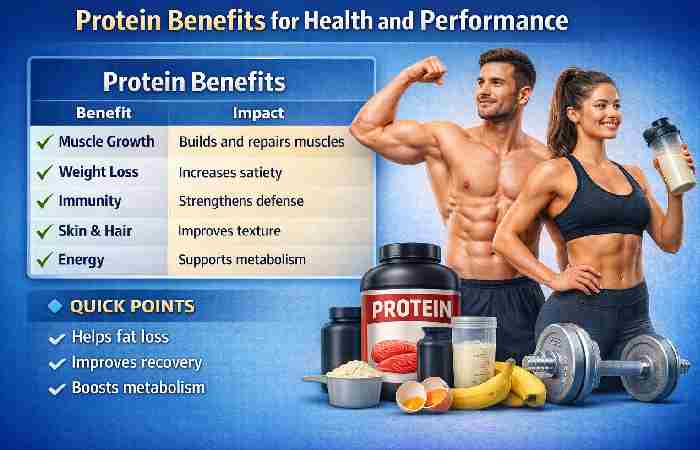
Maintains Muscle Mass
Good consumption prevents the progressive loss of muscle mass. Therefore, it is very beneficial for older adults, as they are the ones who are most likely to have a lot of muscle loss. The FINISHER Shake in Envelopes is perfect for improving muscle mass.
Provides Greater Physical Performance
Albuminoids are the key to repairing damaged tissue after physical activity, whether exercise or forced labour. Therefore, most athletes consume them in high amounts. The SIKEN Cappuccino Coffee Shake increases physical performance.
Weight Control
Studies have shown that adequate intake of protein foods produces a feeling of satiety. In addition, they also help with weight loss, especially when they are free of fat. SIKEN Cereal Protein Bars provide the necessary and take care of weight.
Protein Benefits for Health and Performance
Top 10 Protein Products Worldwide (Price & Benefits)
| Product | Type | Avg Price | Benefit |
| Optimum Nutrition Whey | Whey | $50 | Muscle growth |
| MuscleTech NitroTech | Whey | $45 | Strength gain |
| BSN Syntha-6 | Blend | $40 | Taste + recovery |
| Dymatize ISO100 | Isolate | $55 | Fast absorption |
| MyProtein Impact Whey | Whey | $35 | Budget friendly |
| Orgain Organic Protein | Vegan | $30 | Plant-based |
| Vega Protein | Vegan | $35 | Clean nutrition |
| Garden of Life Protein | Vegan | $40 | Organic |
| Ensure Protein Powder | General | $25 | Health support |
| Herbalife Protein Mix | Meal | $45 | Weight management |
Best Protein Products Available in India
| Product | Type | Who Should Use |
| Amul Protein | Dairy | General health |
| BigMuscles Whey | Whey | Gym users |
| MuscleBlaze Whey | Whey | Athletes |
| Oziva Plant Protein | Vegan | Vegetarians |
| Protinex | Nutrition | Elderly |
Natural Protein Alternatives (No Supplements)
| Food | Protein (per 100g) | Benefit |
| Eggs | 13g | Complete protein |
| Chicken | 27g | Lean muscle |
| Lentils | 9g | Plant protein |
| Paneer | 18g | Calcium rich |
| Almonds | 21g | Healthy fats |
Resource Link:
Protein science guide:
https://www.hsph.harvard.edu/nutritionsource/what-should-you-eat/protein/
Who Should Take Protein Supplements and Why?
Protein supplements are useful for:
- Athletes (muscle recovery)
- Elderly (prevent muscle loss)
- Vegetarians (meet protein gaps)
- Busy professionals (quick nutrition)
| Group | Reason |
| Gym users | Muscle growth |
| Office workers | Easy nutrition |
| Seniors | Prevent weakness |
| Women | Hormonal balance |
Conclusion
Proteins are essential for life, not just fitness. From supporting muscle growth to boosting immunity and improving overall health, proteins play a critical role at every stage of life. Whether through natural foods or supplements, maintaining the right intake ensures better energy, recovery, and long-term wellness.
