
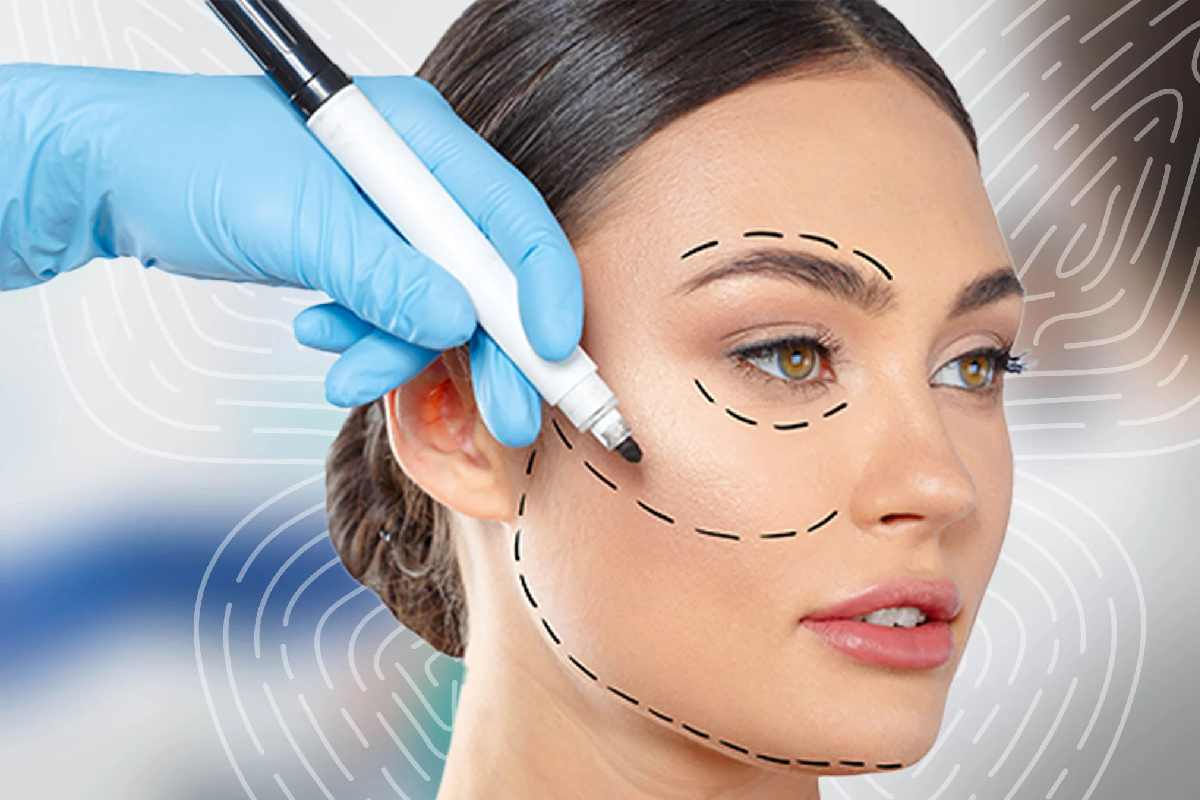
Surgical Facelifts in Birmingham, Alabama, have advanced thanks to technology. A face lift is able to remedy neck lifts, and mouth lines. A cosmetic surgeon performs this operation while you remain unconscious due to general anesthesia.
The majority of patients resume their regular activities within two to four weeks. Knowing your options is essential when dealing with sagging skin, prominent facial lines, or a gaunt appearance. Here is an overview of facelift options for Birmingham, Alabama.
Table of Contents
What Are the Surgery Choices for a Facelift?
Birmingham facelift surgery is also called rhytidectomy, which tightens and lifts the skin on the face and neck. Board certified plastic surgeons are able to customize a plan based on your goals and facial structure.
Traditional Facelift (SMAS Facelift)
This is the main type. It lifts and tightens the muscle and tissue layer under the skin (called SMAS) plus the skin itself. It gives results that last a long time.
Mini Facelift
This uses small cuts and focuses on the lower face. It’s great for light to medium loose skin and early aging signs.
Deep Plane Facelift
This high-tech method moves deeper face tissues. It gives big, natural changes, especially for loose mid-face and jaw areas.
SMAS Facelift with Fat Grafting
This mixes a traditional facelift with fat transfer. It adds back lost fullness to spots like cheeks or under the eyes.
Thread Lift
Not a full surgery, but it uses threads under the skin to lift and tighten. It’s less invasive and good for mild loose skin.
Each choice has its perks and fits different aging problems, like loose skin or less volume. From full facelifts for face and neck to quick thread lifts for early changes, there’s an option for every level of aging.
The big differences are how much tissue is moved, cut sizes and spots, and face areas fixed. Full facelifts move skin and deeper layers a lot. Mini ones are simpler with tiny cuts for the lower face. Deep plane ones shift deeper tissues for better mid-face and jaw fixes, best for stronger aging signs.
Types of Facelift Surgery Compared
Facelift Surgery
| Facelift Type | Areas Treated | Invasiveness | Longevity | Best For |
| Traditional (SMAS) | Face + neck | High | 8–12 years | Advanced aging |
| Mini Facelift | Lower face | Moderate | 4–6 years | Early sagging |
| Deep Plane Facelift | Mid-face, jawline | High | 10–15 years | Severe sagging |
| Facelift + Fat Grafting | Face volume + lift | High | Long-term | Volume loss |
| Thread Lift | Mild lift | Low | 1–2 years | Mild aging |
Peer-reviewed studies show SMAS and deep plane facelifts provide the most durable results compared to minimally invasive lifts.
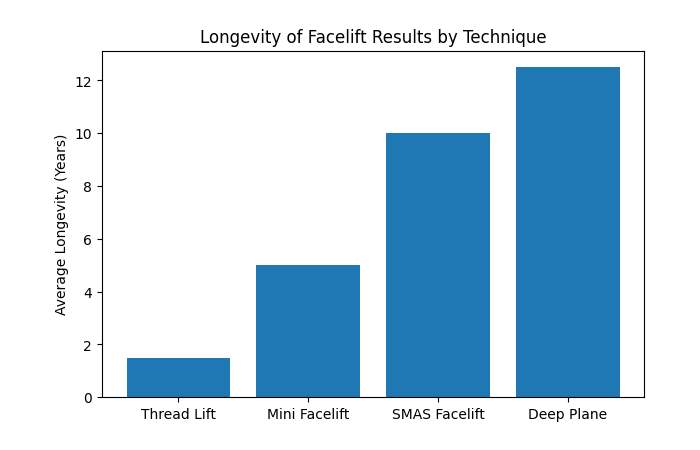
Longevity of Facelift Results by Technique
| Technique | Years Lasting |
| Thread Lift | 1–2 |
| Mini Facelift | 4–6 |
| SMAS Facelift | 8–12 |
| Deep Plane | 10–15 |
Surgical options for a facelift
| Facelift type | Areas treated | Best for | Recovery time | Longevity of results |
| Mini facelift | lower face, jawline | mild to moderate sagging, early aging signs | 1–2 weeks | 5–7 years |
| Smas facelift | midface, jawline, neck | moderate aging, deeper wrinkles | 2–3 weeks | 7–10 years |
| Deep plane facelift | midface, cheeks, jawline | advanced aging, deep folds | 3–4 weeks | 10–15 years |
| Mid facelift | cheeks, under-eye area | sagging cheeks, hollow under eyes | 2–3 weeks | 7–10 years |
| Neck lift (often combined) | neck, jawline | loose neck skin, “turkey neck” | 2–3 weeks | 7–10 years |
How to choose the right option
- Age and skin elasticity play a major role
- Depth of wrinkles and facial sagging matters more than age alone
- Recovery time and lifestyle should be considered
- Surgeon’s recommendation is key for safe, natural results
Who Is Fit for Facelift Surgery?
The best candidates are people who:
- Have medium to bad loose face skin and lines.
- Know what to expect from the surgery.
- Are healthy overall and don’t smoke.
- Feel positive about the process and healing.
Take a appointment of a certified plastic surgeon to check if it’s right for you. They will look at your face and goals to advise the best plan.
Any surgery causes some pain. Pain after a facelift depends on the person and method. Doctors give meds for the first few days. Most say the pain is okay and gets better as you heal.
Facial Aging Patterns & Which Facelift Works Best
Aging Pattern vs Surgical Solution Table
| Aging Concern | Recommended Procedure |
| Loose jawline | Mini or SMAS facelift |
| Sagging cheeks | Deep plane facelift |
| Neck laxity | Full facelift + neck lift |
| Volume loss | Facelift + fat grafting |
| Early skin laxity | Thread lift |
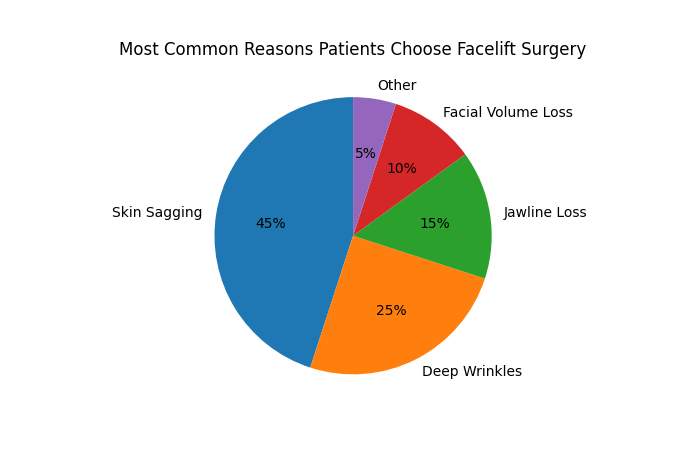
Most Common Reasons Patients Choose Facelift Surgery
| Reason | Percentage |
| Skin sagging | 45% |
| Deep wrinkles | 25% |
| Jawline loss | 15% |
| Facial volume loss | 10% |
| Other | 5% |
What Are the Best Perks of a Facelift?
Facelifts do more than change looks. Key upsides:
- Fresher Look: Tighter skin and fewer lines give a younger face shape.
- More Confidence: Better looks often boost how you feel about yourself.
- Results That Last: They aren’t forever, but good care keeps them for years.
- Natural Feel: New methods make it look real, not stretched or fake.
Risks, Safety & Success Rates of Facelift Surgery
Facelift Safety Statistics Table
| Factor | Data |
| Overall success rate | 95–98% |
| Major complication rate | <2% |
| Minor swelling/bruising | Common |
| Permanent nerve damage | <1% |
| Patient satisfaction | Very high |
According to global plastic surgery registries, facelift surgery is considered one of the safest cosmetic surgeries when performed by board-certified surgeons.
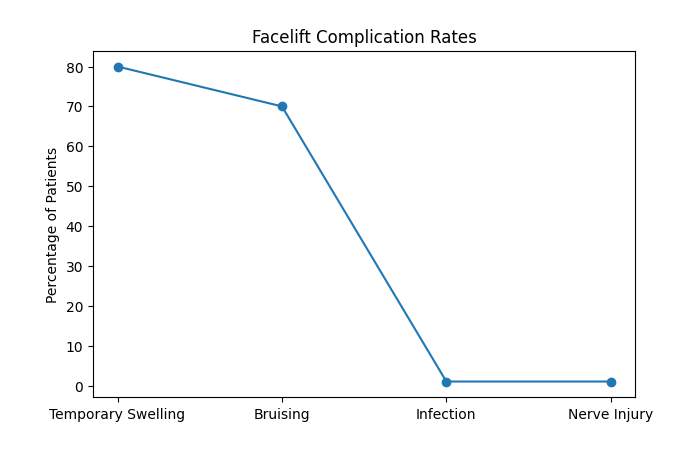
Facelift Complication Rates
| Complication | Percentage |
| Temporary swelling | 80% |
| Bruising | 70% |
| Infection | <1% |
| Nerve injury | <1% |
How Much Does Facelift Surgery Cost?
International Facelift Cost
| Country | Average Cost |
| USA | $7,000–$25,000 |
| UK | £8,000–£15,000 |
| India | $3,500–$7,000 |
| South Korea | $6,000–$12,000 |
| Turkey | $4,000–$8,000 |
Costs vary due to surgeon expertise, facility standards, anesthesia, and post-operative care—not just geography.
How Do I Heal After a Facelift?
Healing differs by person, but here’s a usual timeline:
| Time Frame | What Happens |
| Right After | Some pain, swelling, and bruises. Use meds and ice packs. |
| First Week | Stitches come out. Swelling starts to go down. |
| First Month | Bruises mostly fade. Swelling keeps dropping. |
| Long-Term | Full look shows in 3-6 months as swelling ends. Scars keep fading. |
Follow your surgeon’s rules closely for best healing. Early changes show soon, but the final look takes 3-6 months as things settle. Results last years, based on your skin and aging.
Facelift Recovery Timeline (What Patients Experience)
Recovery Timeline
| Timeframe | Physical Changes |
| Day 1–3 | Swelling, tightness |
| Week 1 | Stitches removed |
| Week 2 | Bruising fades |
| Month 1 | Socially presentable |
| Month 3–6 | Final results visible |
Swelling Reduction Over Time After Facelift
| Time | Swelling Level |
| Week 1 | High |
| Week 2 | Moderate |
| Month 1 | Low |
| Month 3 | Minimal |
Why Get a Facelift in Birmingham, AL?
Birmingham is a top spot for this surgery. It has many certified plastic surgeons who know face work well. Being certified means they passed tough tests on skills and rules, so you trust them more. Local docs give personal plans for your needs.
The city’s clinics have new tools and comforts for great care. Birmingham is known for top health and surgery results, making it a smart pick for quality facelifts.
Picking a facelift is a big step for a face refresh. Learn the types, who it’s for, risks, and perks to decide if it’s for you. See a certified surgeon for advice that fits you.
No matter the type—full, mini, or other—the aim is a natural, lifted look that boosts your confidence and life.
Facelift vs Non-Surgical Anti-Aging Treatments
Surgical vs Non-Surgical Comparison Table
| Treatment | Results | Longevity | Downtime |
| Facelift | Dramatic | 8–15 years | 2–4 weeks |
| Fillers | Moderate | 6–18 months | Minimal |
| Botox | Wrinkle softening | 3–6 months | None |
| Thread lift | Mild | 1–2 years | Few days |
Patient Preference: Surgical vs Non-Surgical
| Option | Percentage |
| Non-surgical | 60% |
| Surgical facelift | 40% |
Conclusion – Surgical Options for a Facelift
Surgical facelift options offer effective and long-lasting solutions for individuals seeking significant facial rejuvenation. From traditional full facelifts to more targeted procedures like mini facelifts, SMAS lifts, and neck lifts, each option addresses specific aging concerns such as sagging skin, deep wrinkles, and loss of facial contour. While surgical facelifts require careful consideration, recovery time, and professional expertise, they remain one of the most reliable methods for achieving noticeable and durable results. Choosing the right procedure depends on age, skin condition, aesthetic goals, and overall health, making consultation with a qualified plastic surgeon essential for safe outcomes and natural-looking results.
