
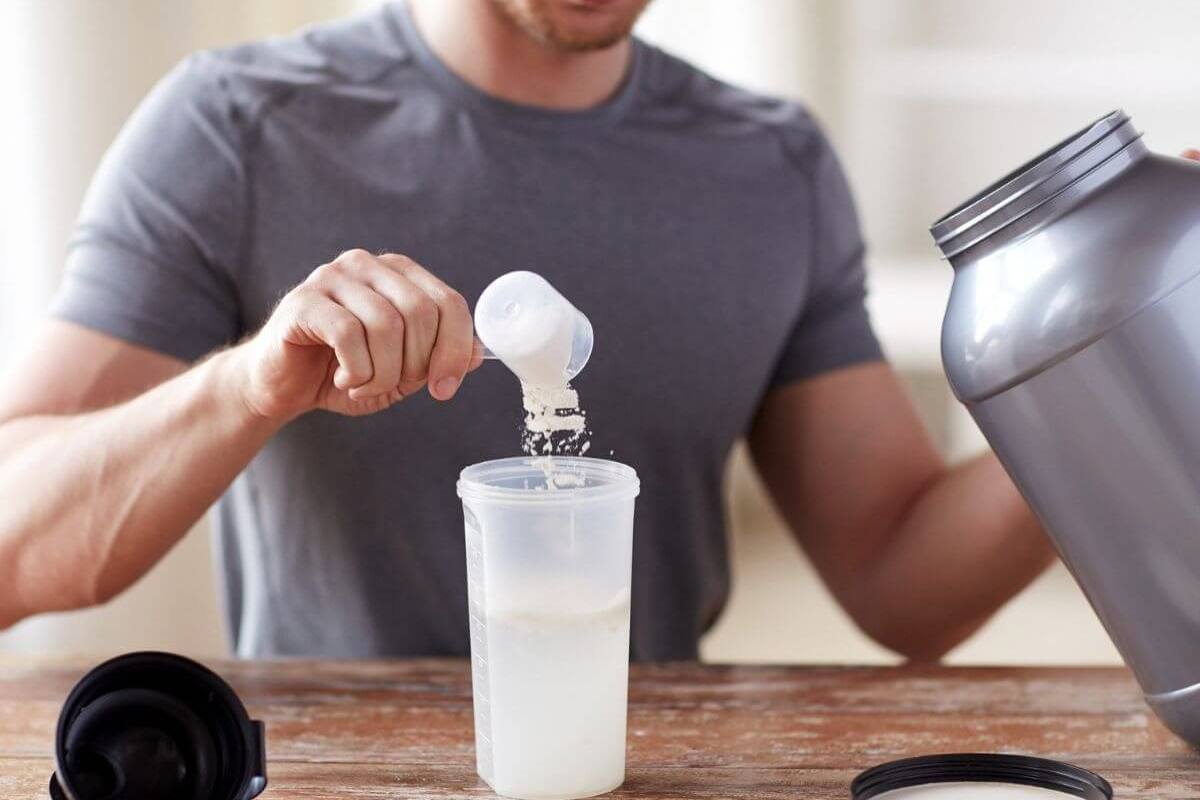
Creatine is a nitrogenous chemical that, when combined with phosphate, creates phosphocreatine, which affects energy metabolism when a skeletal muscle contracts. It is a substance that starts in the body naturally and affects physical performance and muscle mass. Unfortunately, some athletes have a low level of creatine.
In this sense, sports food supplements can fill this gap. Although this substance is associate with athletes, anyone needs it. An appropriate level of this substance can relieve muscle cramps and another discomfort.
This substance is naturally found in the body and synthesize by the kidneys, pancreas, and liver.
According to the French chemist Chevreul, this amino acid is found in many foods such as meat and fish. However, it has low levels of creatine compared to artificial supplements. This substance is capture by muscle tissue and store almost entirely. That is, 95% is found in skeletal muscle.
Table of Contents
What Is Creatine?
Creatine is a naturally occurring nitrogen-containing compound synthesized in the liver, kidneys, and pancreas from amino acids like glycine, arginine, and methionine. Around 95% of it is stored in skeletal muscles, with the remaining amount found in the brain and other tissues.
Its primary role is to regenerate adenosine triphosphate (ATP) — the body’s main energy currency — during short, intense physical activities like sprinting or weightlifting.
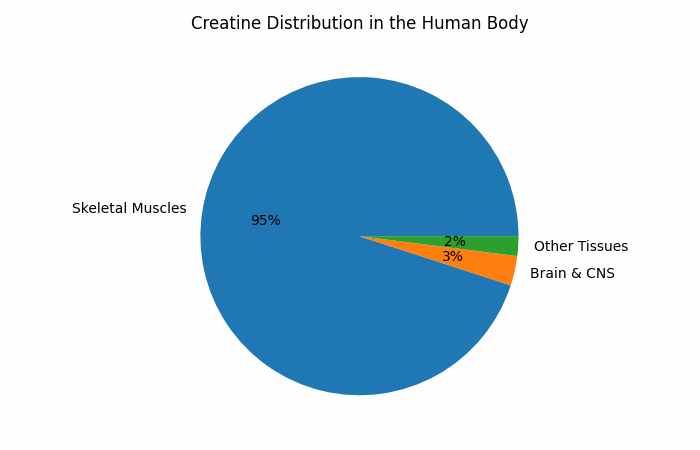
Creatine Distribution in the Human Body
| Body Area | Percentage |
| Skeletal Muscles | 95% |
| Brain & CNS | 3% |
| Other Tissues | 2% |
How Creatine Works in the Body (ATP Energy Cycle)
Creatine works by increasing phosphocreatine stores in muscles. During high-intensity exercise, phosphocreatine donates a phosphate group to ADP, rapidly regenerating ATP. This allows muscles to contract longer and with more force.
This system is most active during:
- Heavy lifting (1–10 reps)
- Sprinting
- Explosive sports movements
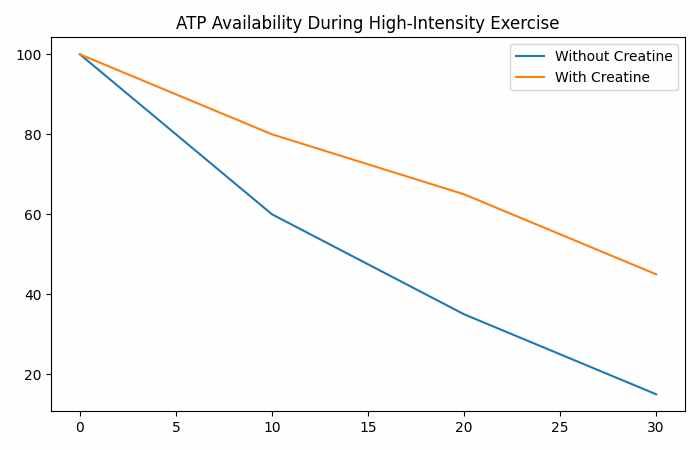
ATP Availability During High-Intensity Exercise
| Time (seconds) | ATP Without Creatine | ATP With Creatine |
| 0 | 100% | 100% |
| 10 | 60% | 80% |
| 20 | 35% | 65% |
| 30 | 15% | 45% |
What Is Creatine Used For?
The metabolic function of it is summarise in the optimal development of muscles. In turn, it intervenes in the energy demands of the body. It is activate when some effort is initiate in the forces.
Using creatine as an energy system is fast, but it is quickly depleted when the body is subjected to constant physical exertion. In this sense, nutritional supplements have been created that contribute to the formation of muscles of many athletes, especially those related to bodybuilding or requiring high musculature.
Scientifically Proven Benefits of Creatine
According to the International Society of Sports Nutrition (ISSN),it is one of the most effective ergogenic aids for increasing high-intensity exercise capacity and lean body mass.
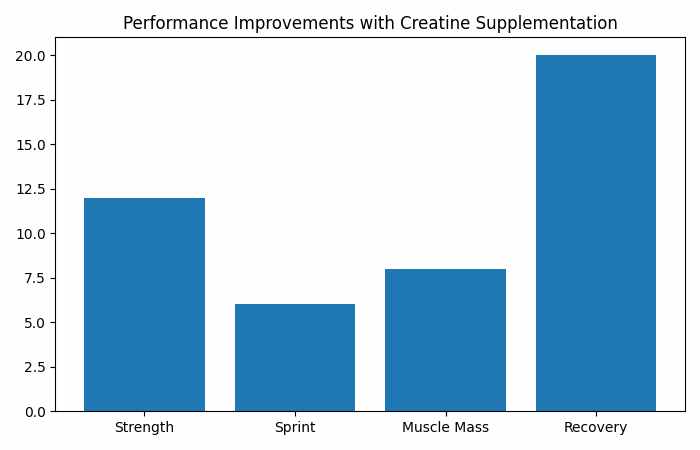
Performance Improvements with Creatine Supplementation
| Benefit | Improvement (%) |
| Strength Gain | 10–15% |
| Sprint Performance | 5–8% |
| Muscle Mass Increase | 5–10% |
| Recovery Speed | 15–25% |
It is one of the most researched sports supplements in the world, with hundreds of peer-reviewed studies supporting its safety and effectiveness.
Evidence-Based Benefits of Creatine
- Creatine increases muscle strength – True
Supports rapid ATP regeneration by increasing phosphocreatine stores. - It improves high-intensity performance – True
Enhances short bursts of power, speed, and explosive movements. - It helps muscle recovery – True
Research shows reduced muscle damage and post-exercise inflammation. - It supports lean muscle mass gain – True
Promotes muscle cell hydration and protein synthesis. - It benefits cognitive function – True
Supports brain energy metabolism, especially in students and older adults. - It may support bone health – True
When combined with resistance training, it may help maintain bone density. - Creatine is unsafe for long-term use – False
The International Society of Sports Nutrition recognizes it as safe and effective when used at recommended doses.
More Incredible Energy In The Muscles
Thanks to the fact that it affects muscular energy, athletes have more excellent resistance. So naturally, this translates into more challenging and longer workouts. However, it is an ally for high-level athletes (professionals), as it combats muscle fatigue.
Greater Muscle Development
The development of muscles occurs because fluid accumulates in the cells. This substance favours the production of the energy molecule ATP, which allows greater mobility in strength and increases its size, helping to develop lean mass.
Injury Prevention
- Another outstanding benefit of it supplements is muscle recovery. Long or very intense days can affect the muscles and cause injuries. In this sense, it is necessary to implement certain recovery routines. Therefore, it intervenes in muscle fibres and helps muscle regeneration.
- According to certain medical studies, it has been point out that oral creatine can decrease the development of muscle, tendon and ligament cramps
- Some studies suggest that it fights wrinkles and sagging skin, so you can get a dose of this substance in some anti-ageing or anti-ageing treatments.
Promotes Bone Health
It is an irrefutable reality that mineral, musculoskeletal and bone density are affect with age. In this sense, some research has indicated that the contribution of it through supplements can affect bone health.
Non-Muscle Benefits of Creatine
| Area | Contribution |
| Brain & Cognition | 35% |
| Bone Health | 25% |
| Skin & Anti-Aging | 20% |
| Recovery & Injury Prevention | 20% |
Types of Creatine Supplements
Choosing the right form can improve results and digestion because Not all creatine supplements are the same.
Comparison of Popular Creatine Types
| Type of Creatine | Absorption | Research Support | Best For |
| Monohydrate | Excellent | ⭐⭐⭐⭐⭐ (Most studied) | Everyone |
| Micronized | Very high | ⭐⭐⭐⭐ | Better digestion |
| HCL | High | ⭐⭐⭐ | People with bloating issues |
| Buffered | Moderate | ⭐⭐ | Acid-sensitive users |
| Liquid | Low | ⭐ | Not recommended |
Creatine Monohydrate remains the gold standard due to proven results, affordability, and safety.
Creatine Dosage Guide
Correct dosing plays a major role in effectiveness and safety.
Recommended Creatine Dosage
| Phase | Dosage | Duration | Purpose |
| Loading phase (optional) | 20 g/day (split doses) | 5–7 days | Rapid muscle saturation |
| Maintenance phase | 3–5 g/day | Ongoing | Sustained benefits |
| No-loading option | 3–5 g/day | Long-term | Slower but effective |
SEO Tip: Long-term daily use is more important than loading for most people.
Natural Food Sources vs Creatine Supplements
Although it exists naturally in food, reaching effective levels through diet alone is difficult.
Creatine Content in Common Foods
| Food Source | Creatine per 1 kg |
| Beef | ~4–5 g |
| Salmon | ~4–5 g |
| Tuna | ~3–4 g |
| Chicken | ~3 g |
| Milk | Trace amounts |
To match 5 g of supplemental creatine, you would need to eat over 1 kg of meat daily, which is impractical for most people.
Who Should Use Creatine Supplements?
It is not only for athletes.
Ideal Users of It
✔ Bodybuilders & strength trainers
✔ Endurance athletes (short bursts)
✔ Vegetarians & vegans (lower natural levels)
✔ Older adults (muscle preservation)
✔ Individuals with high physical workloads
Not recommended without medical advice for:
- Kidney disease patients
- Pregnant or breastfeeding women
How To Take Creatine?
A sports health specialist should always guide the correct way to take creatine. We do not endorse the consumption of any supplement as a substitute for a balanced diet.
It should note that, although you can get a dose of it in foods of animal origin such as tuna, salmon, red meat, and liver, among others, the level of this substance is shallow. Therefore, it is much more convenient to consume it supplements. In addition, it is an excellent option for vegetarians who want to increase muscle mass.
By the way, the consumption of supplements should be combine with hard training and balanced rest.
How Does It Take Effects Of Creatine Consumption?
Consumption can be perceive immediately. Therefore, an improve energy level is directly experience.
Of course, each organism is different, and its effects will depend mainly on the amount ingested and the time of use. Some athletes maintain that the impact on better muscle development has perceive after six weeks of consumption
Precautions And Contraindications
It is consider safe if use under the supervision of a trained nutritionist. However, it is essential to consider the following factors:
Interactions
It should not be combine with caffeine, as it can cause interactions. In the same way, if you are following drug treatment, you should consult your doctor.
Dose
- Do not take more significant amounts. Otherwise, it can cause problems with the kidneys.
- Weight gain. Consumption can cause weight gain.
Best Creatine Supplements
| Brand | Form | Why It’s Popular | India Price (₹) | USA Price ($) | UK Price (£) | Australia Price (A$) | Best For |
| Optimum Nutrition (ON) | Micronized Powder | Trusted global brand, clean & reliable | 1,200–1,500 | 18–22 | 15–18 | 30–35 | Consistent muscle & strength gains |
| MuscleBlaze | Micronized Powder | Affordable, lab-tested Indian favorite | 800–1,200 | — | — | — | Beginners & budget users |
| Creapure® (Ultimate / Stark) | Creapure Powder | 99.99% pure German creatine | 1,500–2,000 | 25–30 | 20–25 | 40–45 | Serious athletes & pros |
| MyProtein | Micronized Powder | Good quality, neutral taste | 1,400–1,700 | 20–25 | 14–18 | 28–34 | Daily training & performance |
| Dymatize | Micronized Powder | Fast absorbing, strong recovery | 1,300–1,600 | 18–23 | 16–19 | 32–38 | Faster recovery & pumps |
| GNC Pro Performance | Micronized Powder | Reliable retail brand | 1,300–1,700 | 19–24 | 17–21 | 35–40 | Strength-focused workouts |
| AS-IT-IS Nutrition | Micronized Powder | Pure, no additives, very cheap | 700–900 | — | — | — | Budget purists |
| BigMuscles Nutrition | Micronized Powder | Lowest price, decent quality | 300–1,000 | — | — | — | First-time creatine users |
Conclusion
We can highlight that consumption is especially beneficial in the sports field. Those who are not athletes or do not practice any arduous physical activity should check if its use is safe. A nutritionist doctor will be able to weigh the benefits and risks for each type of patient.
