
Table of Contents
What Is Solid Shampoo and How Does It Work?
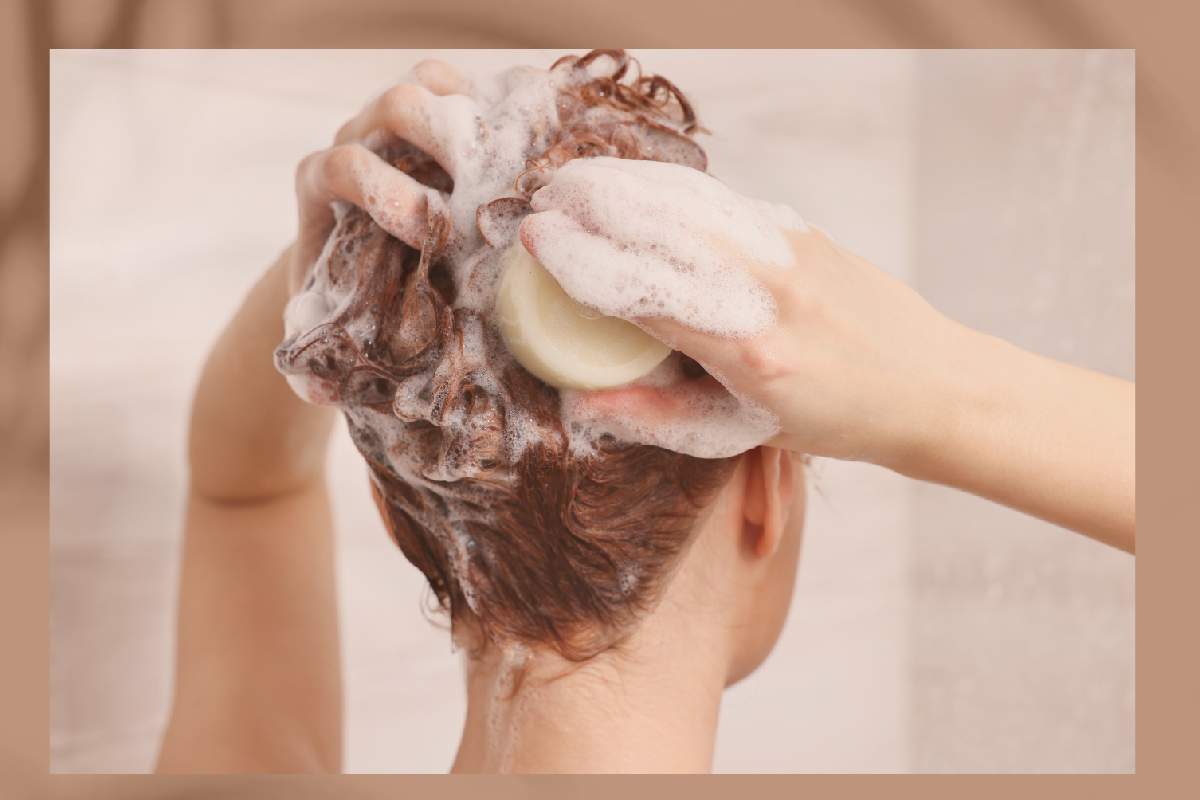
We refer to solid shampoo as a cosmetic composition used to wash the scalp and hair that, rather than being liquid, is found to be trustworthy. In other words, it may compare solid shampoo to a bar of soap, but its application is safe for the scalp and hair. To suit the demands of this body area, a stable shampoo must-have features that are distinct from those of traditional soap.
How Solid Shampoo Works on Hair & Scalp (Science Explained)
Hair Cleansing Mechanism Table
| Step | What Happens | Scientific Explanation |
| Wetting hair | Hair swells | Cuticle opens slightly |
| Surfactant contact | Dirt binds | Oil-loving tail traps sebum |
| Massage | Emulsification | Dirt lifts from scalp |
| Rinsing | Removal | Water washes debris away |
Solid shampoos clean hair using the same surfactant science as liquid shampoos, but with far less water.
Water Content Comparison
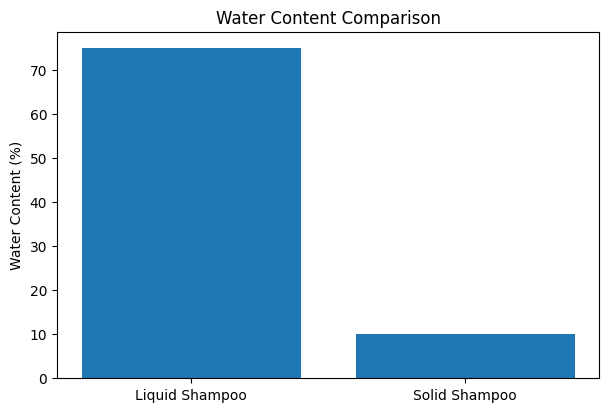
| Shampoo Type | Water Content |
| Liquid shampoo | 70–80% |
| Solid shampoo | 5–15% |
Solid Shampoo Ingredients
The solid shampoo visually resembles a bar of soap in every way, depending on the product and the manufacturer. Shape and color may differ based on what will require the imagination, marketing, or what the producer wants to say with his product.
Let’s put aesthetics aside for a while and examine the components of solid shampoo in further depth. The removal of dirt comprises sebum generated by glands located in hair follicles and residues of hair products – the primary elements can only be surfactants.
Surfactants are molecules with a hydrophilic component designated as “head” and soluble in water and a hydrophobic part described as “tail” and soluble in oil in their chemical structure. Surfactants have this property, which allows them to bind dirt and sebum on the head and hair and carry it away when washed with water. May utilize many different forms of surfactants.
Some have a strong cleaning ability and generate a dense foam, while others are more delicate, produce a thinner foam, and are simpler to rinse. The natural surfactant to use depends on several factors, such as the type of shampoo obtained. Water will also include in solid shampoos but considerably less than liquid shampoos.
Ingredients Used in Solid Shampoo (Global Formulation Overview)
Common Ingredient Categories Table
| Ingredient Type | Purpose | Examples |
| Surfactants | Cleansing | SCI, SLSa, Coco-glucoside |
| Conditioning agents | Softness | Shea butter, cocoa butter |
| Humectants | Moisture retention | Glycerin, aloe vera |
| Actives | Scalp health | Tea tree, neem, rosemary |
| Binders | Solid structure | Starches, clays |
Ingredient Composition in Typical Solid Shampoo
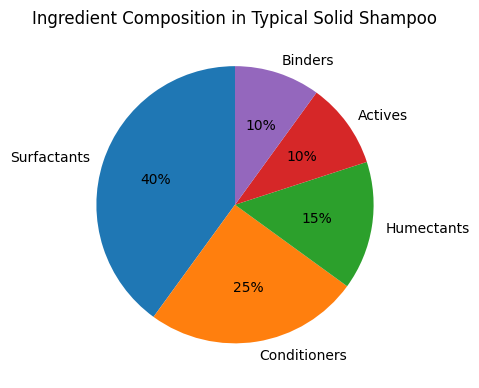
| Category | Percentage |
| Surfactants | 40% |
| Conditioners | 25% |
| Humectants | 15% |
| Actives | 10% |
| Binders | 10% |
Shampoo with a pH of 7.0
Solid shampoos generated by saponification techniques are also available on the market. In other words, the shampoo will make using the same process as making conventional soap. The pH of the solid shampoos made in this manner is somewhat basic. As a result, after using them, the producers usually recommend doing an “acid rinse,” which is a rinse with substances with a slightly acid pH to prevent the hair from becoming “dull” or “dull.”
It happens when you use solid shampoos with a somewhat basic pH, which is find in the structure of your hair. Transversally dissecting the hair shaft – the visible part – reveals three layers: an inner world one called the medulla, a transitional one called the cortex (which contains the pigments responsible for hair coloring), and an outer edge part known as the cuticle, which will make up of flattened cells arranged as small flakes in a pattern similar to the arrangement of roof tiles.
pH Level of Solid Shampoo & Its Impact on Hair Health
Hair Structure vs pH Table
| pH Level | Hair Cuticle Effect | Result |
| 4.5–5.5 | Cuticle closed | Smooth, shiny hair |
| 6–7 | Slight swelling | Mild roughness |
| 8–9 | Cuticle lifted | Dull, frizzy hair |
Hair’s natural pH is slightly acidic, which is why acidic-balanced solid shampoos perform better.
Hair Cuticle Damage vs pH Level
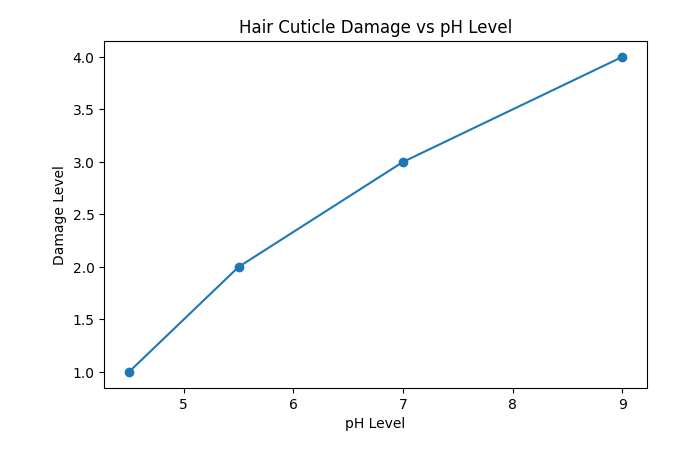
| pH | Damage Level |
| 4.5 | Very Low |
| 5.5 | Low |
| 7 | Moderate |
| 9 | High |
What Is the Best Way to Use Solid Shampoo?
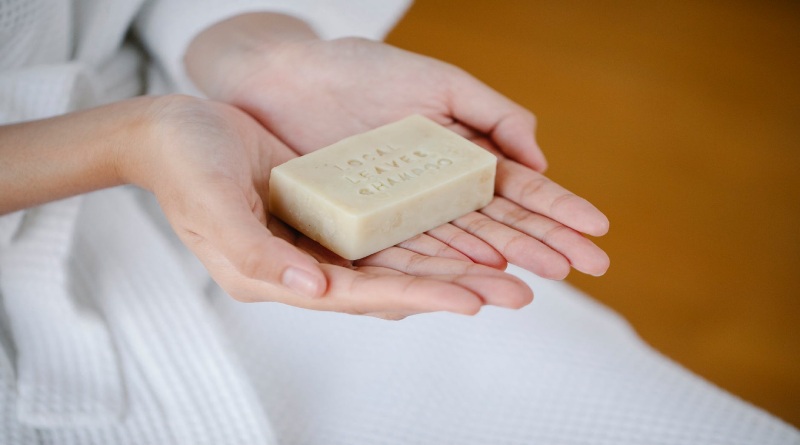
Solid shampoo is modest to use and does not need any specific action. It is essential to massage the product on your hands until foam forms, then wash your head and hair; instead, you may rub it straight on wet hair until foam forms, then wash your hands as usual. Please remember that washing should gently massage the skin with the fingertips to minimize scalp irritation and hair damage.
Solid Shampoo vs Liquid Shampoo
Comparison Table
| Feature | Solid Shampoo | Liquid Shampoo |
| Water usage | Very low | Very high |
| Packaging | Minimal / paper | Plastic bottles |
| Shelf life | Long | Moderate |
| Travel-friendly | Excellent | Restricted |
| Environmental impact | Low | High |
Environmental Footprint Comparison
| Factor | Solid | Liquid |
| Plastic waste | Low | High |
| Carbon footprint | Low | Medium |
| Transport weight | Low | High |
Advantages And Disadvantages
The Advantages and disadvantages of purchasing and using solid shampoos differ from person to person. We’ll do our best to make it happen down there.
- Solid shampoos, when used appropriately, tend to last longer than their liquid counterparts.
- Solid shampoo is simple to use, and in most circumstances, just a tiny quantity will require to wash.
- They are convenient to transport since they are “leakproof” and “bypass” the problem of the liquid product restriction in cabin baggage when flying.
- Plastic will rarely use in packaging.
Solid Shampoo’s Potential Disadvantages
- Many people may disadvantage the requirement to dry and store solid shampoo away from the water to prevent wasting it.
- Solid shampoos should allow to dry completely before being packed in the packaging they’re transported when used on the move. It might disadvantage when time is limited.
- Compared to ordinary shampoos, the price of certain solid shampoos may be too exorbitant for some individuals.
Who Should Use Solid Shampoo (Hair & Scalp Types)
Suitability Table
| Hair Type | Is Solid Shampoo Suitable? | Notes |
| Normal hair | Yes | Balanced cleansing |
| Oily scalp | Yes | Choose gentle surfactants |
| Dry hair | Depends | Needs conditioning formula |
| Curly hair | Yes | Sulfate-free preferred |
| Color-treated hair | Careful | pH-balanced only |
Top Solid Shampoo Bars Around the World
Sure 👍 here’s the same table, just shuffled (mixed order, still simple and clean):
| Country | Product | Approx Price | Availability |
| UK | Garnier Ultimate Blends Solid Shampoo | ~₹1,200 | UK stores, Amazon |
| India | Earth Rhythm Shikakai Shampoo Bar | ~₹279 | Amazon, Blinkit |
| Germany | N.A.E. Solid Shampoo | ~₹450 | Amazon, EU stores |
| USA | KITSCH Coconut Oil Solid Shampoo Bar | ~₹1,360 | Brand website, Amazon |
| South Korea | Vegan Solid Shampoo Bar | ~₹3,000 | Ubuy, Online import |
| India | Earth Rhythm Murumuru Butter Shampoo Bar | ~₹299 | Amazon |
| USA | Aveda Shampure Solid Shampoo Bar | ~₹1,450 | Online retailers |
| UK | Klorane Oat Bio Solid Shampoo Bar | ~₹975 | Boots, Online |
Global Users of Solid Shampoo by Hair Type
| Hair Type | Share |
| Normal | 35% |
| Oily | 25% |
| Dry | 20% |
| Curly | 15% |
| Treated | 5% |
Sustainability & Environmental Impact of Solid Shampoo
Environmental Impact
| Factor | Solid Shampoo | Liquid Shampoo |
| Plastic waste | Minimal | High |
| Water usage | Very low | High |
| Transport emissions | Reduced | Higher |
| Shelf stability | Long | Shorter |
Plastic Waste Reduction Over Time
| Bottles Replaced | Waste Reduced |
| 1 | 30% |
| 2 | 60% |
| 3 | 90% |
