
There are many types of Women’s Hair. First, there is beauty, which is what happens to us with our hair(women’s hair); if something characterizes us or makes us look attractive, it is our hair.
Although everything must be said to make it look as it deserves, we must give it the care and attention.
Do you know what kind of mane(hair) you have? Here we offer you a list of the most common hair, its characteristics and its main virtues or defects.
Table of Contents
Why Understanding Your Hair Type Matters
Hair type is determined by genetics, scalp sebum production, climate, hormones, and lifestyle. According to global dermatology studies, choosing products or routines without understanding hair type increases hair breakage by up to 40%. Knowing your hair type helps you select the right cleansing frequency, treatments, oils, and styling methods.
What is Your Hair Type?
Main Types of Women’s Hair (Dermatology-Based Classification)
Global Classification of Women’s Hair Types
| Hair Type | Sebum Level | Texture | Shine | Common Regions |
| Normal Hair | Balanced | Smooth–Wavy | High | Worldwide |
| Straight Hair | Low–Moderate | Smooth | Very High | East Asia, Europe |
| Wavy Hair | Moderate | S-shaped | Medium | Mediterranean, Latin regions |
| Curly Hair | Moderate–Low | Spiral | Low–Medium | Africa, Caribbean |
| Dry Hair | Very Low | Rough | Low | Cold & arid climates |
| Oily (Greasy) Hair | High | Heavy | Dull | Humid & tropical areas |
Normal Hair – Characteristics, Care & Risks
Normal Hair Profile
| Feature | Description |
| Sebum Production | Balanced |
| Breakage Risk | Low |
| Styling Difficulty | Easy |
| Wash Frequency | 2–3 times/week |
| Common Mistake | Over-washing |
Effect of Over-Washing on Normal Hair Moisture
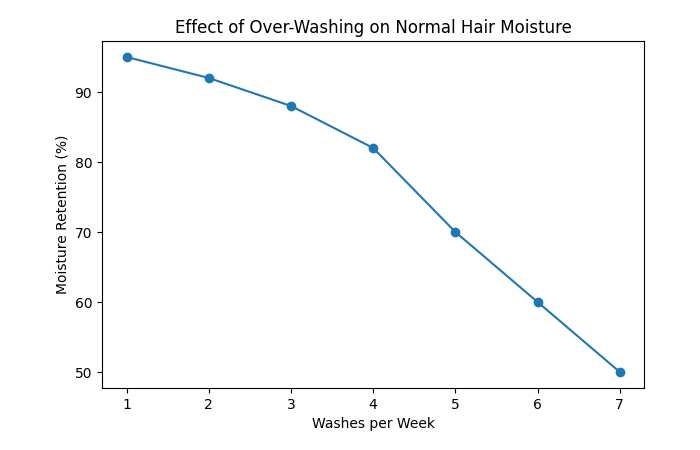
- X-axis: Washes per week
- Y-axis: Moisture retention (%)
Moisture drops significantly after 5+ washes/week.
It is identified as being tame, shiny, silky hair because it produces the necessary fat and is not dry but not oily. It is undoubtedly the type of hair every woman would like to have.
- Such healthy hair that it does not need any special care. This looks spectacular, hydrated, and full of life only by keeping it clean.
- And in others, some S is small, making the curls more delicate and much more defined, making the mane look more abundant.
- As it depends a lot on the climate, it is prone to damage and frizz when there is a lot of humidity due to a lot of rain, snow or excessive wind,
- So we can say that its shape is between smooth (straight) and curly. So it is a middle ground.
- Its problem is that it masses easily, and it is this detail can lead a person with curly or wavy hair to dry combing. It is one of the worst mistakes.
Straight or Smooth Hair
Its fall is entirely traditional, and it has minimal volume. However, many of this hair has an incredible shine since they have excellent natural hydration; it is accessible to combing. Generally, it is neither extraordinarily greasy nor scorched.
Although there are those who with these manes do have these problems.
Straight Hair Advantages vs Drawbacks
| Advantages | Drawbacks |
| High shine | Lacks volume |
| Easy to detangle | Gets oily faster |
| Reflects light well | Shows grease easily |
Dry Hair
This hair is a headache for those with it because it is fine hair with very little fat and is easy to break. As a result, it curls easily, and instead of sensation silky or smooth, it has a curly effect, with the tips wide open and battered.
But do not care if you get down to work. You can progress this situation; We must recognize that to achieve this, you have to arm yourself with patience,
Set your goal line to change your behaviours of beauty and health and beg willing to invest in your person and appearance.
Causes of Dry Hair (Global Data)
| Cause | Percentage |
| Climate (cold/dry) | 35% |
| Heat styling | 30% |
| Chemical treatments | 20% |
| Poor nutrition | 15% |
Greasy Hair
As its name suggests, excess fat is one of its main features. In addition, some people have greasy scalps by nature.
For example, young people during youth and many women due to menopause
Many women who have greasy hair say it is a real contest and sometimes even irritating since in a short time they look dirty because the excess fat and sebum make it look dull and denser. And with the arrival that you have been days without washing it even if you did it a day or two before.
Greasy Hair Triggers
| Trigger | Example |
| Hormonal changes | Puberty, menopause |
| Climate | Humidity |
| Overwashing | Stimulates oil glands |
| Product buildup | Silicone-heavy products |
How to Identify Your Hair Type
Without a doubt, there is significant variability in women’s hair types. Although we have not mentioned them all, if we can ensure that our hair type is one of the aspects that defines and identifies us, we must give it the care it warrants because we should all love our hair.
How to Identify Your Hair Type at Home
| Test | Result | Hair Type |
| Blotting paper oily | Excess oil | Oily |
| No oil, no flakes | Balanced | Normal |
| Flakes, rough feel | Dry | Dry |
| Oil at scalp, dry ends | Mixed | Combination |
Tending Brown, Blue, or Black Hair Dye
Spot treat clothes with a stain-lifting enzyme liquid laundry detergent. Rub it gently into the stain with a soft-bristled brush. Rinse it well.
Fill in bucket, basin, or sink with cool water. Then, soak the stained clothes with an oxygen-based bleach. Could you read and follow its directions? Let clothes sit for at least 8 hours or overnight. Then, if you cannot see any stains, you can launder the clothes. But, types of Women’s Hair if there are slight remains, you can repeat the process.
White clothes and the stain remain after several rounds of soaking; chlorine bleach soak is your last option. Mix one gallon of water and ¼ cup of chlorine bleach. Soak your white garment for 15 minutes. Do not prolong it longer than 15 minutes. It weakens the fabric.
Hair Color & Hair Type Interaction
Hair Dye Impact by Hair Type
| Hair Type | Dye Absorption | Damage Risk |
| Normal | Medium | Low |
| Straight | High | Medium |
| Dry | Very High | High |
| Oily | Low | Low |
Dealing with Red Hair Dye
Mix a quart of water, a half teaspoon of liquid dishwashing soap, and a tablespoon of household ammonia. Submerge the stained area and soak it for 15 minutes.
Gently scrub the dye stain with your fingers. It loosens the dye stain from the fabric. Soak it again for another 15 minutes. Rinse well before you transfer your clothes to the next solution.
Prepare ¼ distilled white vinegar and a quart of warm water. Let the marked area soak for 30 minutes. Then, launder the garment as usual.
Hair Dyes on Carpet
You certainly cannot remove the stains by soaking the carpet for hours. It needs more patience and care. It would help if you treated the colour as soon as possible not to spread the stain.
Hair Dye Stains – Fabric vs Surface Comparison
Dye Removal Success Rate
| Surface | Best Method | Success Rate |
| Cotton fabric | Oxygen bleach | 85% |
| White fabric | Chlorine bleach | 70% |
| Carpet | Ammonia + vinegar | 60% |
Global Hair Care Summary & Best Practices
| Do | Don’t |
| Choose products by hair type | Copy others’ routines |
| Adjust care by season | Overwash |
| Protect hair from heat | Skip conditioning |
Conclusion
Hair type is not just about appearance—it is influenced by biology, climate, hormones, and habits. Understanding your hair type allows smarter product choices, better styling results, and long-term hair health. With the right care, every hair type can look beautiful, strong, and manageable.