
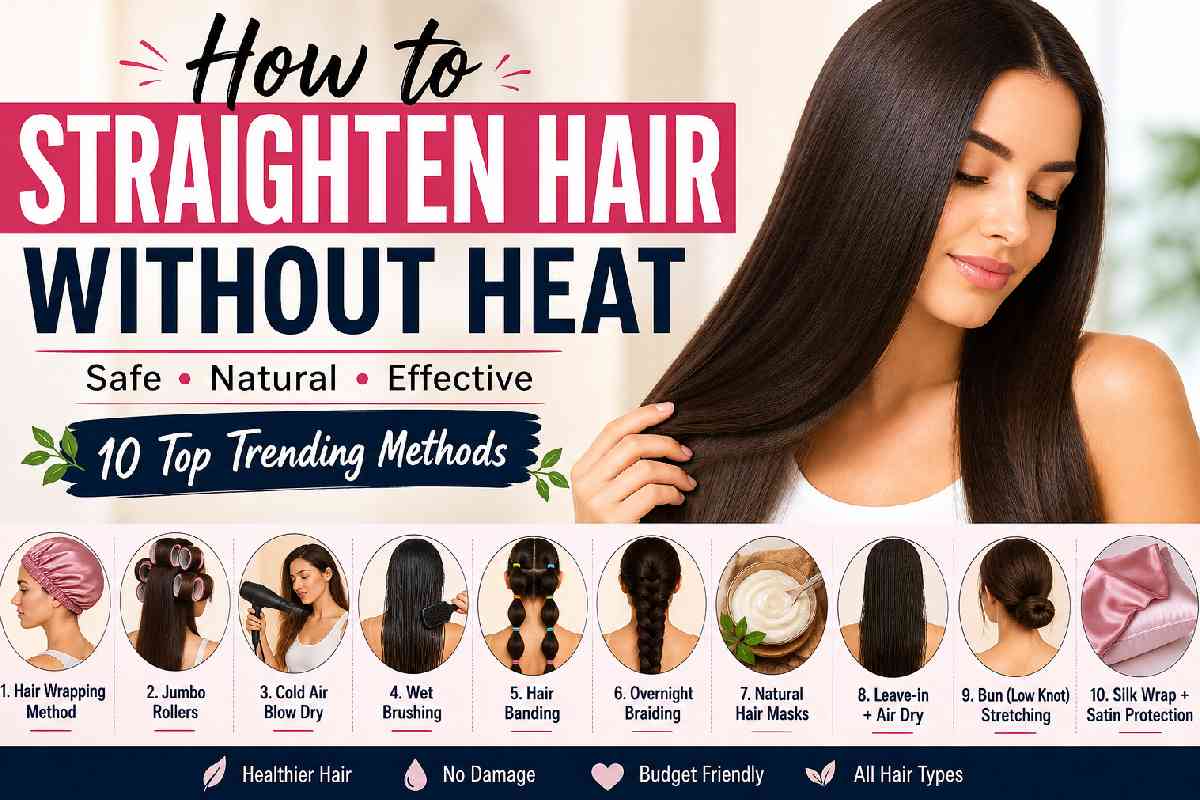
If you’ve been searching for how to straighten hair without heat, you’re not alone. Millions of people are forsaking heat damage, dryness and long-term weakening of the hair by moving away with the flat irons and blow dryers. The good news? This is because your hair can be straightened and flattened without subjecting the hair to any detrimental temperature.
It is a research-based guide that entails all that you need: viable techniques, methods that are supported by science, tools, tips and practical applications in the US. At the end, you will have a full grasp of the procedures of how to straighten hair without heat safely and effectively.
Table of Contents
Natural Ways to Straighten Hair Without Heat
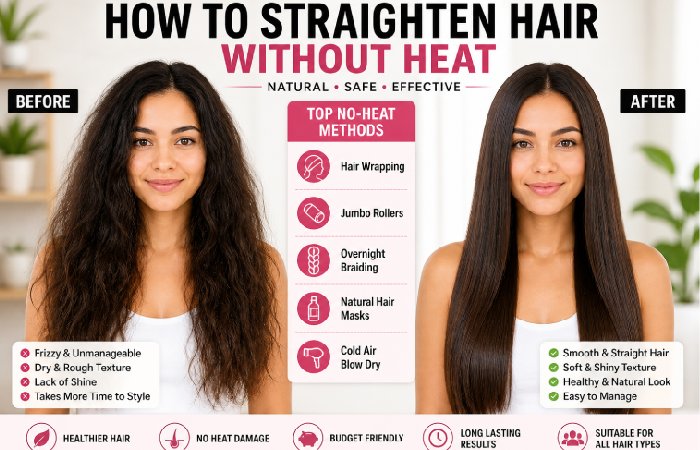
Why Choose to Straighten Hair Without Heat?
The Science Behind Heat Damage
Heat styling devices such as the flat irons can reach temperatures of over 200 o C (392 o F). Studies indicate that recurrent exposure to it weakens the keratin proteins and results in::
- Hair breakage
- Split ends
- Loss of natural moisture
- Permanent texture damage
Benefits of Going Heat-Free
| Benefit | Explanation |
| Hair Health | Prevents protein breakdown |
| Moisture Retention | It keeps natural oils intact |
| Cost Saving | No expensive tools needed |
| Long-Term Growth | It reduces breakage |
| Eco-Friendly | Less electricity use |
Who Should Use Heat-Free Hair Straightening?
The ideal use of how to straighten hair without heat is:
- Individuals who have broken or split hair.
- Curly/wavy hair types in need of temporary straightness.
- Children or adolescents who do not use heating devices.
- Anyone who is interested in natural beauty routines.
- Professionals seeking no-hustle styling.
Hair Types and What Works Best
Explain how to straighten hair without heat varies by hair type.
| Hair Type | Best Method | Expected Result |
| Curly | Wrapping + rollers | Smooth, stretched curls |
| Wavy | Braiding + serum | Nearly straight |
| Thick | Rollers + leave-in | Controlled straightness |
| Fine | Wrapping only | Sleek finish |
Top 5 Ways Americans Use Heat-Free Hair Straightening
| Method | Purpose | Popularity in US |
| Hair Wrapping | Overnight straightening | Very High |
| Rollers | Volume + straight look | High |
| Blow-Dry Cold Air | Mild straightening | Moderate |
| Natural Masks | Frizz control | High |
| Braiding Techniques | Loose wave straightening | Moderate |
Top 10 US Trending Methods: How to Straighten Hair Without Heat
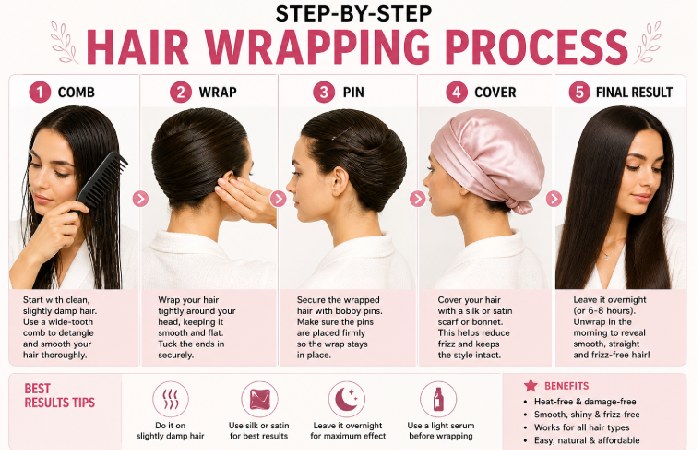
1. Hair Wrapping Method (Most Popular in the US)
- Wrap damp hair tightly around your head and secure with pins
- Leave overnight for best results
- This is one of the most recommended techniques by experts and widely used in US routines
Best For: Wavy to curly hair
Result: Smooth, sleek finish
2. Jumbo Rollers Method
- Use large plastic rollers on damp hair
- Leave for 4–8 hours or overnight
- Experts highlight rollers as a top heat-free styling option for achieving straighter hair with volume
Best For: Medium to long hair
Result: Straight + bouncy
3. Cold Air Blow Dry Technique
- Use a blow dryer on cool setting only
- Brush hair straight while drying
- This method reduces damage significantly compared to heat styling
Best For: All hair types
Result: Mild straightening
4. Wet Brushing (Tension Method)
- Brush damp hair repeatedly as it dries
- Keeps strands stretched and straight
- Widely used for beginners because it’s simple and requires no tools
Best For: Wavy hair
Result: Natural straight look
5. Hair Banding Method (Trending for Natural Hair)
- Tie sections of hair with elastic bands
- Keeps hair stretched while drying
- This method is trending for textured and natural hair communities in the US
Best For: Thick and curly hair
Result: Stretched, straighter strands
6. Overnight Braiding Technique
- Braid damp hair loosely
- Undo in the morning
- Popular DIY method mentioned in beauty guides for heatless styling
Best For: Wavy hair
Result: Slightly straight with soft waves
7. Natural Straightening Hair Masks
- Use coconut milk, aloe vera, or honey
- Helps relax hair texture over time
- Natural masks improve smoothness and reduce frizz
Best For: Frizzy or dry hair
Result: Gradual straightening
8. Leave-In Conditioner + Air Dry Method
- Apply smoothing product
- Let hair air dry while combing
- Experts emphasize using the right products to relax hair strands
Best For: Fine to medium hair
Result: Sleek and controlled
9. Bun (Low Knot) Stretching Method
- Tie hair into a loose bun while damp
- Let it dry naturally
- Common in US low-maintenance routines
Best For: Long hair
Result: Loose straight effect
10. Silk Wrap + Satin Protection Method
- Combine wrapping with silk scarf or pillowcase
- Reduces friction and frizz
- Highly recommended in professional styling routines
Best For: All hair types
Result: Smooth, shiny hair
Comparison Table: Effectiveness of Methods
| Method | Straightness Level | Time Needed | Popularity (US) |
| Hair Wrapping | 5 | Overnight | Very High |
| Rollers | 4 | 4–8 hrs | High |
| Cold Blow Dry | 3 | 30–60 min | High |
| Wet Brushing | 3 | 1–2 hrs | Moderate |
| Banding | 4 | 2–6 hrs | High |
| Braiding | 2 | Overnight | Moderate |
| Natural Masks | 3 | Weekly use | High |
| Leave-in + Air Dry | 3 | 1–2 hrs | High |
| Bun Method | 2 | 4–6 hrs | Moderate |
| Silk Wrap | 4 | Overnight | Very High |
Heat-free styling is rising due to hair damage awareness
Natural hair movement in the US increased demand for:
- Protective styling
- Low-manipulation methods
- DIY beauty routines are trending post-2020
Step-by-Step Hair Wrapping Process
Research Insight: Does It Really Work?
According to a study conducted in the dermatology journals, mechanical stretching techniques (such as wrapping and rollers) can temporarily change the shape of hair, without any structural damage.
Key Finding:
- Hair bonds remain intact
- No keratin breakdown
- Safe for regular use
Comparison: Heat vs No Heat Straightening
| Feature | Heat Straightening | No Heat Methods |
| Speed | Fast | Slow |
| Damage | High | None |
| Cost | Expensive tools | Low cost |
| Longevity | Long-lasting | Moderate |
| Hair Health | Weakens hair | Improves hair |
Advanced Techniques for Better Results
- Cold Blow Drying
Use a blow dryer on cool setting while brushing.
- Leave-In Conditioners
Helps smooth strands and reduce frizz.
- Anti-Frizz Serums
Locks in straight texture naturally.
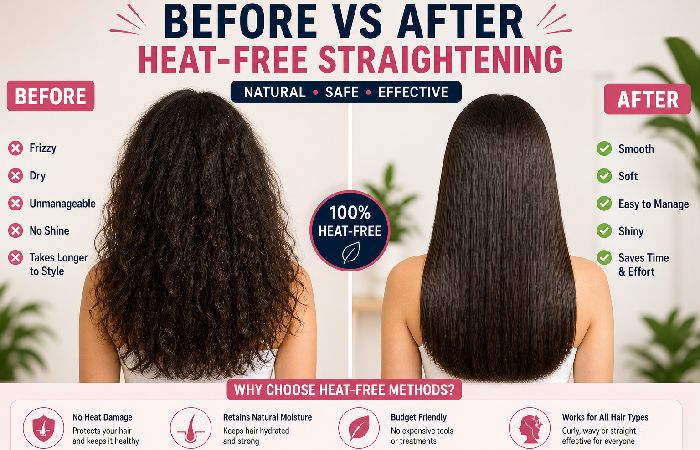
Before vs After Heat-Free Straightening
Step-by-Step Weekly Routine for Best Results
Weekly Plan Table:
| Day | Routine |
| Day 1 | Wash + mask |
| Day 2 | Wrap hair overnight |
| Day 3 | Maintain with serum |
| Day 4 | Re-wrap if needed |
| Day 5 | Light oil treatment |
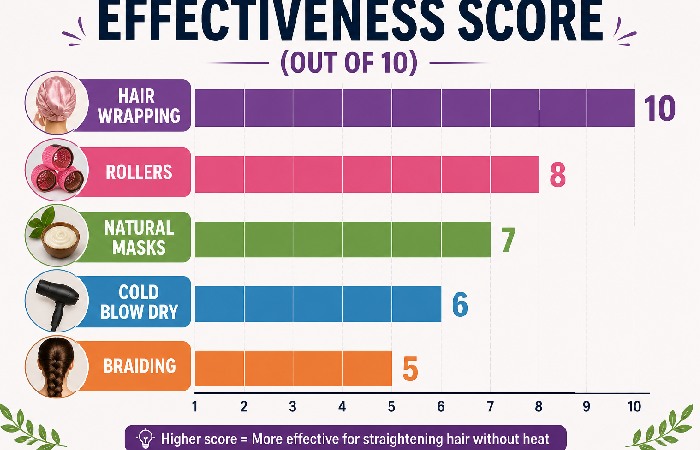
Effectiveness of Methods
Products That Help Straighten Hair Without Heat
| Product Type | Purpose | Best For |
| Leave-in Conditioner | Smooth texture | Frizz control |
| Argan Oil | Shine + softness | Dry hair |
| Aloe Vera Gel | Natural straightening | Curly hair |
Climate and Humidity Impact on Hair Straightening
| Climate | Effect on Hair | Solution |
| Humid | Frizz returns quickly | Use anti-frizz serum |
| Dry | Holds straight longer | Hydrate hair |
| Cold | Best results | Minimal effort needed |
Myths About Straightening Hair Without Heat
- Myth: It doesn’t work → False
- Myth: Only works on wavy hair → False
- Myth: Takes too long → Depends
Common Mistakes to Avoid
- Using too much product
- Wrapping dry hair (should be damp)
- Skipping conditioning
- Using tight elastics (causes breakage)
Pro Tips for Best Results
- Use silk or satin pillowcases
- Always detangle before styling
- Apply lightweight oils
- Be consistent with routine
Tools You Need for Heat-Free Straightening
| Tool | Purpose |
| Wide-tooth comb | Detangling |
| Hair rollers | Stretch curls |
| Silk scarf | Reduce friction |
| Satin pillowcase | Maintain style |
How Often Should You Do It?
| Hair Type | Frequency |
| Curly | 2–3 times/week |
| Wavy | 1–2 times/week |
| Straight | As needed |
Long-Term Benefits of Heat-Free Straightening
- Stronger hair structure
- Reduced hair fall
- Better shine and texture
- Natural volume retention
FAQs
Will it be effective on very curly hair?
Yes, but you can have softer straight than pin-straight.
How many minutes does it take?
Usually, 1-3 days, based on the humidity.
Is it possible that I can mix methods?
Yes, combining wrapping + serum works best.
Final Thoughts
It is not just a fashion of beauty to learn how to straighten your hair without the use of heat. By practicing, using the correct techniques, and using natural products, you will be able to have smooth and straight hair without any damage.
These techniques are available, cheap, and efficient on all hair types, whether in the US or any part of the globe.
