
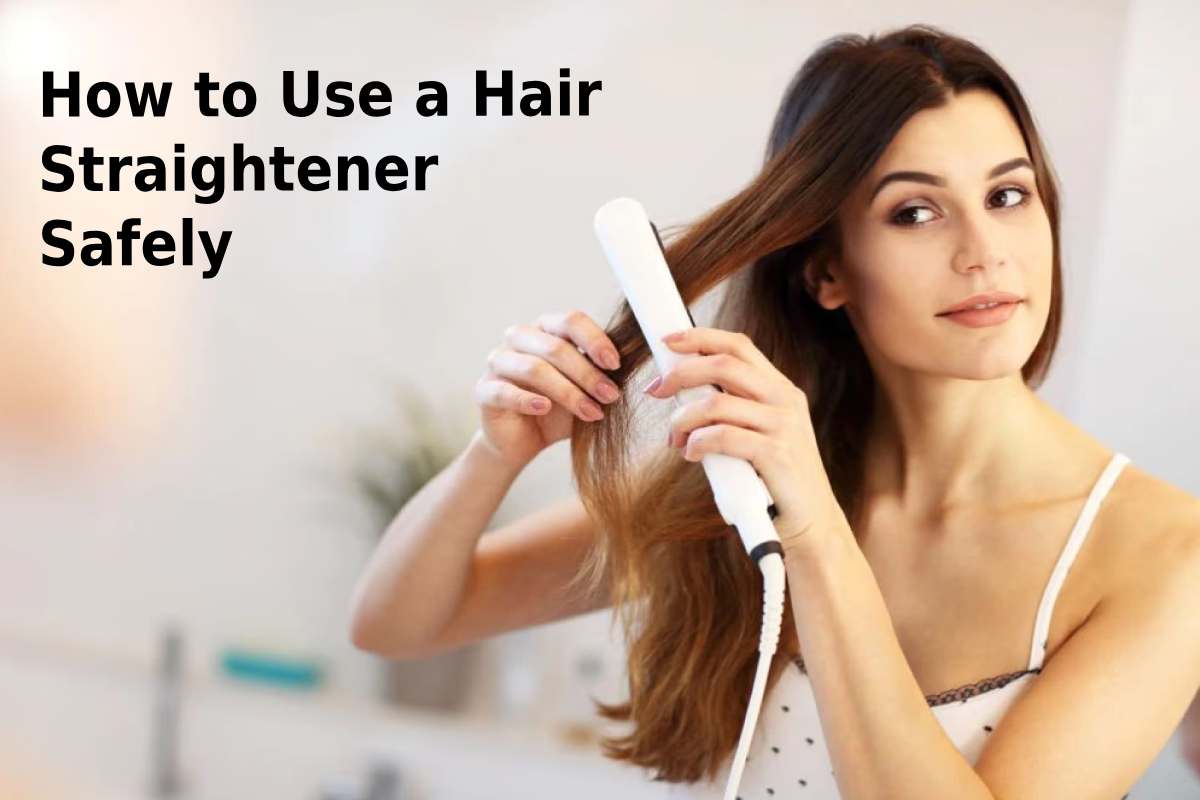
Many people use hair straighteners for every event or occasion. Not only is it essential for some to style their hair regularly, but it has also become vital for others. Many people use hair straighteners for every event or occasion. It is not only essential for some to style their hair regularly, but it has also become vibrant for others. But do you know how to use a hair straightener correctly? Alternatively, you may style it fast! Don’t worry; we’ve put up a comprehensive instruction to use a hair straightener.
Hair straighteners that are fashionable and user-friendly have emerged due to modern technology. You don’t want to go to a shop if you wish to have straight hair. However, it may not be easy if you are using it for the first. Although they are easy to use, If you use it ones you will ger an idea of it just you need to Understand them to assure safety. Here’s a quick tutorial on how to use a hair straightener at home if you are using it for first time.
Table of Contents
Global Usage Trends of Hair Straighteners
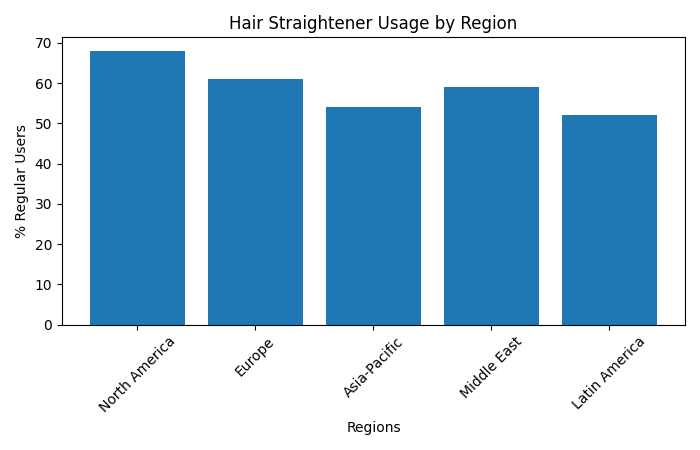
Hair straighteners are no longer limited to salons. Globally, home styling tools—especially hair straighteners—are used across age groups, hair types, and regions. Rising beauty awareness, social media influence, and work-from-home culture have increased daily usage worldwide.
Hair Straightener Usage by Region (Estimated % of Users)
| Region | Regular Users (%) | Occasional Users (%) |
| North America | 68% | 22% |
| Europe | 61% | 27% |
| Asia-Pacific | 54% | 31% |
| Middle East | 59% | 25% |
| Latin America | 52% | 29% |
How to Use a Hair Straightener? A Step-by-Step Guide
Hair Preparation
- First wash your hair cleanly – Always keep in mind that You should clean your hair the day before you straighten it for the best results, but it’s satisfactory if it will pass. Make sure to use high-quality shampoo and conditioner.
- After you get out of the shower, pat your hair dry with your towel, softly wringing your hair in parts rather than forcibly ruffling it dry. After showering, patting your hair dry helps to avoid additional frizz.
- Apply hair product – When straightening is required, use a hair styling balm designed to protect your hair. Use a spray product if you’re starting with dry hair.
- Comb your hair well before using a straightener to ensure that there are no knots and that your hair will spread evenly.
Choosing the Right Heat Setting for Your Hair Type
Using the wrong heat is one of the biggest reasons for hair damage. Different hair types need different temperature ranges to stay healthy while styling.
Ideal Hair Straightener Temperature by Hair Type
| Hair Type | Recommended Heat (°C) | Risk if Overheated |
| Fine / Thin | 130–150°C | Breakage, dryness |
| Normal | 150–170°C | Moisture loss |
| Thick | 170–190°C | Frizz, split ends |
| Curly / Coarse | 180–210°C | Curl damage |
| Chemically Treated | 120–140°C | Severe damage |
Begin By Straightening Throught Hair Straightener
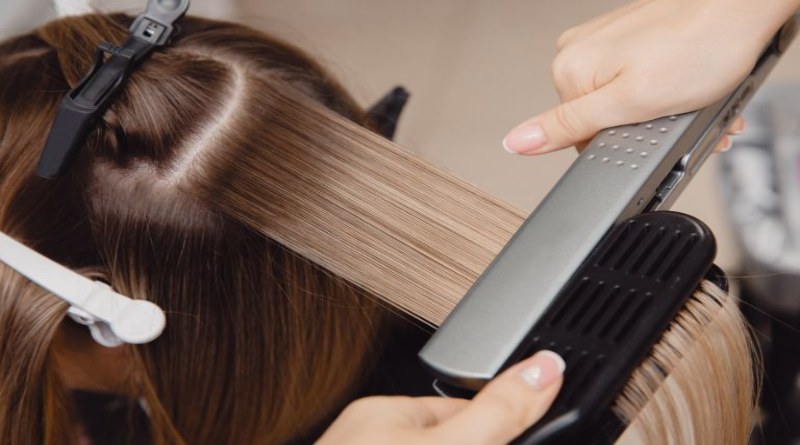
Hair straightener with ceramic plates — Use a high-quality hair straightener. The results will outweigh the cost, and a higher-quality item should keep you using the same hair iron for a long time.
Plugin your iron and turn it on – besides the “on” switch will be a numerical heat setting that you can change to your chosen heat level. The higher the numerical setting, the thicker and frizzier your hair should be.
Change the setting to suit your hair type – Don’t fall into the trap of thinking that the hotter the straightener, the better. You’ll do damage to your hair. Set your straightener to the lowest setting if your hair is skinny and fragile to avoid damaging your hair.
Place the hair straightener near the roots as possible – but you should be careful not to overheat. If your hair is straight, this means your straightener should start around 1 inch (2.5 cm) from your scalp. If you have curly or textured hair, get closer than 1 inch (2.5 cm) to avoid your roots becoming curled. Take it carefully, without burn yourself.
Working in tiny pieces from the base to the crown of your head is the best technique to straighten your hair. Discharge some more hair and continue working in portions after that section is straight.
Keep the hair straightener moving and work slowly—this will give you a smoother outcome and help you avoid damaging your hair.
It should only be necessary to go through a hair segment two or more times – divide the hair portions and take them as needed.
Impact of Hair Straighteners on Hair Health (Research Overview)
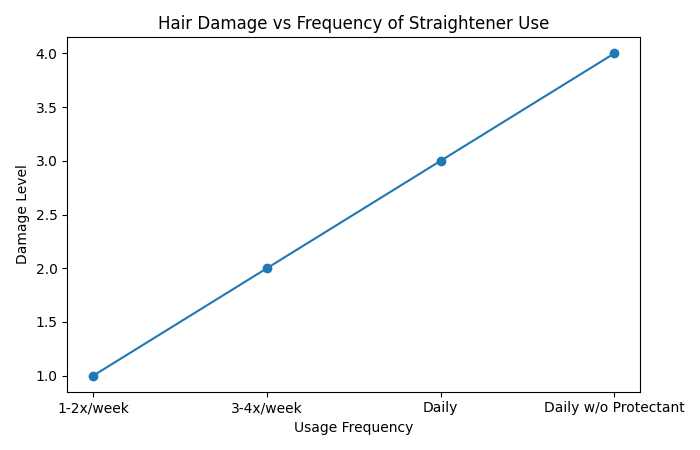
When used correctly, modern hair straighteners cause minimal damage. However, repeated exposure to high heat without protection weakens the hair shaft over time.
Effects of Frequent Hair Straightener Use
| Frequency | Hair Condition After 6 Months |
| 1–2 times/week | Healthy, manageable |
| 3–4 times/week | Slight dryness |
| Daily use | Brittle, split ends |
| Daily without heat protectant | Severe damage |
Aftercare
To set your style, use a blast of chilly air from your hair dryer’s excellent shot catch.
To keep your hair from becoming fuzzy or fleecy, apply a small amount of serum to your strands. And it keeps your hair straight throughout the day. Silicone-based anti-frizz serums are exceptionally efficient in keeping hair straight.
Giving oneself a straight salon haircut at home is straightforward with the right hair molding tools. Hair styling goods, and expertise in hair fixing!
Do’s
Do’s Invest in a high-quality hair straightener – The hair requires the most investment in a high-quality item. Your hair straightener should not harm your hair and should last a long time.
Remember to apply a heat protectant – A heat protectant may have a significant impact on the health of your hair. So, when your hair is still damp, add a heat protectant.
Allow your hair to cool down after straightening it – After straightening your hair, allow it to cool for a few actions before continuing to style it because chilly air helps protect the cuticles of your hair.
Straighten your hair in sections – Segmenting your hair can help achieve more significant results while level pressing. Begin by separating the upper half of your hair from the bottom half with a basic level area.
Correct shampoo and conditioner – The shampoo and conditioner you use are critical to maintaining the health of your hair.
Don’t’s
Straightening damp hair will not recommend since wet hair reacts to heat differently than dry hair. The inner cortex of each hair may hold up to 30% of its weight in water when wet.
Every day, straightening your hair is unnecessary because hair straighteners are quick and easy to use. However, your hair will become dry and brittle in the long term.
Don’t forget to clean your straightener – It’s essential to clean your straightener regularly. It does not have to appear unclean, but it must include dust.
Common Hair Straightener Mistakes (And Their Consequences)
Many people damage their hair not because of the tool—but because of incorrect use.
Hair Straightener Mistakes vs Results
| Mistake | Result |
| Straightening wet hair | Hair breakage |
| High heat on fine hair | Hair thinning |
| Repeating passes | Protein loss |
| No heat protectant | Cuticle damage |
| Dirty plates | Uneven heat |
Hair Straightener Lifespan & Maintenance Data
A quality hair straightener can last years—but only if maintained properly.
Hair Straightener Lifespan by Usage
| Usage Pattern | Average Lifespan |
| Occasional home use | 5–7 years |
| Regular home use | 3–5 years |
| Salon use | 1.5–3 years |
Types of Hair Straighteners You Can Use at Home
| Hair Straightener Type | Best Use / Why It Fits |
| dyson hair straightener | Advanced heat control for smooth styling with less damage |
| best hair straightener | Ideal for everyday styling across all hair types |
| tymo hair straightener | Beginner-friendly and quick for daily straightening |
| chi hair straightener | Professional-quality results with even heat distribution |
| ceramic hair straightener | Helps reduce frizz and protects hair from heat damage |
| cordless hair straightener | Convenient for travel and quick touch-ups |
| dyson corrale hair straightener | Flexible plates for better control and reduced breakage |
| mini hair straightener | Perfect for short hair, bangs, and precise styling |
| tymo hair straightener brush | Combines brushing and straightening in one step |
| ghd hair straightener | Salon-level styling with consistent heat technology |
| hair straightener brush | Easy option for beginners who want fast results |
| l’ange hair straightener | Lightweight design suitable for regular home use |
| best hair straightener for thick hair | Higher heat performance to manage dense hair |
| tymo hair straightener comb | Helps straighten while detangling hair evenly |
| steam hair straightener | Uses moisture to reduce dryness and heat damage |
| best hair straightener for curly hair | Designed to smooth curls without excessive passes |
| dual voltage hair straightener | Safe and convenient for international travel |
| best hair straightener for frizzy hair | Controls flyaways and maintains smoothness |
| best hair straightener for fine hair | Gentle heat settings to prevent hair breakage |
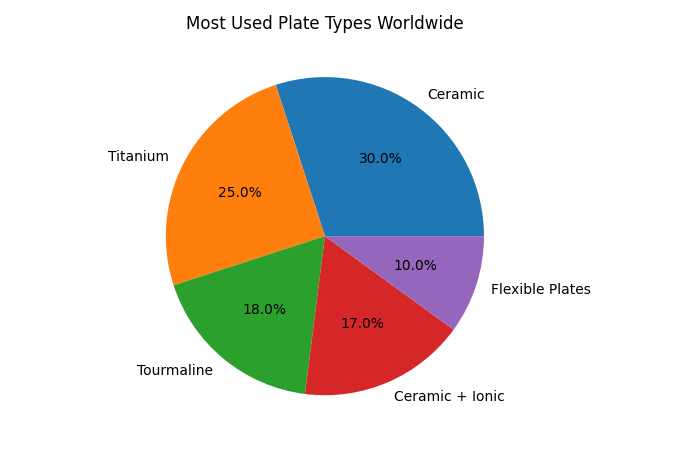
Hair Straightener Plate Technology Comparison
Different plate materials affect heat distribution, hair safety, and final results.
Hair Straightener Plate Types Explained
| Plate Type | Best For | Benefit |
| Ceramic | Frizzy hair | Even heat |
| Titanium | Thick hair | Fast styling |
| Tourmaline | Dry hair | Reduces static |
| Ceramic + Ionic | Daily use | Smooth finish |
| Flexible plates | Curly hair | Less breakage |
Hair Straightener vs Other Styling Tools (Global Preference)
Hair straighteners are more versatile compared to curlers or blow dryers.
Styling Tool Comparison
| Tool | Straightening | Curling | Volume |
| Hair straightener | ✔✔✔ | ✔✔ | ✔ |
| Curling iron | ✖ | ✔✔✔ | ✔ |
| Hair dryer | ✔ | ✖ | ✔✔✔ |
How to Curl Your Hair With a Straightener
Your Straightener could also do the job of a curling iron. Jerky waves and bouncy curls can be achieved using nothing more than a straighter, and, in no time, you’ll be getting the job done in a snap.
Step-by-Step Guide
When you plan to straight your hair with the help of Straightener, always make sure your hair is fully clean and dry. Then, you need to apply some heat and protection spray to avoid damaging your hair. Make sure to section off hair, and remember that the tighter the section, the tighter the beat of the curl.
The looser the section, the curl, and the more beachy wavey it will be. You’re going to want to create a high clean section, and leave the straightener as close to the roots as you can. Then, while holding your hair, rotate the straighter away from your face.
Watch the rotation. Be sure to do no more than one to one and a half. You want to do this slowly and down your hair. To create some more curl and volume, do some rotations toward your face and some downward.
To make sure your curls and waves last, no touching until they cool off. To create a more relaxed vibe to the look, you can choose to run your fingers through the beach waves.
Styling Versatility of a Hair Straightener
A hair straightener is not just for straight hair. With the right technique, it can create waves, curls, and volume—making it one of the most versatile tools in hair styling.
Hairstyles Possible with a Hair Straightener
| Style | Difficulty Level |
| Sleek straight | Easy |
| Beach waves | Medium |
| Soft curls | Medium |
| Flicked ends | Easy |
| Curtain bangs | Easy |
Pro Tip
For loose waves, keep the straightener moving quickly. For tighter curls, slow down slightly—but never hold the iron in one spot for too long.
